By Ron Smith, Farm Press Editorial Staff

The bar has been set high: one-third of the U.S. fuel supply to come from biofuel production and 900 million tons of biofuel stock to come from agriculture....
By Donald Stotts, Oklahoma State University
Oklahoma State University and its partner institutions in industry are receiving $4.2 million from the U.S. Department of Agriculture to continue groundbreaking work in the development of biofuels....
A $20 million National Science Foundation grant will further establish Kansas as an internationally recognized leader in global climate change and renewable energy research - and will let a Nobel-Prize winning K-State scientist continue his work on the effects of climate change....
Agriculture Secretary Tom Vilsack announced the approval of a $17.4 million loan to Greensburg Wind Farm, LLC, to provide financing for the 10 wind turbine project that will supply power to the community of Greensburg, Kan. ...
Revolution, the 2009 Oklahoma Wind Energy Conference, is scheduled for Dec. 2-3, 2009, Cox Convention Center, Oklahoma City. ...
By Forrest Laws, Farm Press Editorial Staff

Three Midwest senators have introduced legislation that would prevent EPA from penalizing U.S. corn and soybean growers for land use changes or potential land clearing for increased biofuel production in other countries....
By Forrest Laws, Farm Press Editorial Staff

U.S. soybean farmers have much to lose and little to gain from the current language in the Environmental Protection Agency’s proposed rule on the implementation of the expanded Renewable Fuel Standard....
By Blair Fannin, Texas A&M University
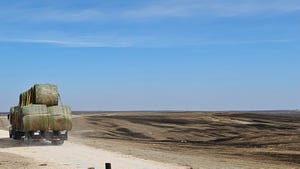
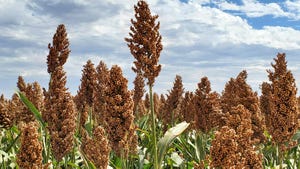
The best logistics for harvesting energy sorghum standing taller than 10 feet are still under construction, experts say. ...
By Forrest Laws, Farm Press Editorial Staff

Is the Environmental Protection Agency deliberately trying to “stack the deck” against ethanol and other biofuels?...
A proposed federal Renewable Fuel Standard (RFS-2) uses assumptions and methodologies that excludes vegetable oil (including soybean oil), or about 70 percent of all available domestic raw material for biodiesel. ...
advertisement

This course covers a wide range of options to effectively control weeds in cotton and reduce the risk of weed resistance management. It is accredited for hours/units for licensed/accredited applicators in 7 U.S. Cotton Belt states (Florida, Georgia, New Mexico, Oklahoma, Texas, South Carolina an d Tennessee. CCA credit is pending).
Integration of a new mode of action compound like Coragen into IPM and IRM programs to control Lepidoptera in leafy greens, fruiting vegetables, peppers and brassica or cole crops is always welcome. This online CE accredited course details how best to use this new mode of action insecticide in intensive vegetable production. It is accredited by the Certified Crop Adviser (CCA) program and by state agencies for licensed applicators in Texas, Georgia, Florida, New Jersey and Pennsylvania.
Keeping crop protection chemicals on the crop for which they are intended has been a cornerstone of farming not only to protect neighboring crops, but to not waste money allowing products to drift off the intended target. This accredited online continuing education course covers the critical elements of spray drift management.