Crop rotation improves success with no-till crop production

Jun 11, 2009 12:58 PM, By Ron Smith
Farm Press Editorial Staff

Crop rotation and cover crops enhance the effectiveness of no-till cropping systems by reducing disease and weed pressure, improving soil moisture holding capacity and increasing soil organic matter content.

“It’s hard to think about no-till without crop rotation,” said Oklahoma State University graduate student Silvano Abreu at the No-Till Oklahoma Conference in Oklahoma City earlier this year.

“I have not seen no-till success without rotation,” he said. “Rotation promotes healthy soil and makes it more productive.”

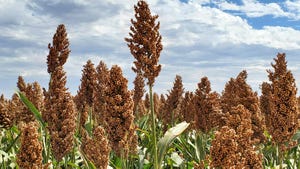
He said wheat after wheat in no-till systems promotes weed and disease pressure. “Rotation to corn or milo breaks that cycle. Rotation helps manage weeds such as shattercane.”

Chad Godsey, OSU Extension agronomist, agrees. “Crop rotation offers a lot of benefits to no-till production, and we have several alternative crops and cover crops available. It’s important to maintain soil cover as much as possible to enhance soil quality. Growers need to maintain flexibility with crop options.”

Godsey said one criticism of using winter cover crops is potential moisture loss. “It takes only one rainfall to replenish moisture lost to a cover crop,” he said. “That’s usually adequate.”

Southwest farmers have several rotation and cover crops available. Abreu said ryegrass planted after harvesting cotton helps protect soil over the winter and also produces biomass and soil organic matter.

“With a single crop it’s hard to break down soil compaction. Rotation provides different kinds of root systems that help break compaction layers.”

He said continuous cotton produces very little biomass. “Adding a cover crop increases biomass significantly. Austrian winter pea, for instance, grows rapidly, to 4 inches tall in just a few weeks.”

A combination of a forage radish and oats also provides significant benefits as a cover crop, producing as much as 4,000 pounds of biomass per acre. “The forage radish increases water infiltration potential,” Abreu said. “The plant dies with cold weather but the big roots remain in the soil. Those roots are 85 percent water and as they decompose they release moistures into the soil.”

Godsey said the oats decompose slower and maintain live plants longer than the radishes so the combination keeps live vegetation on the soil for much of the winter.

Abreu said pigeon pea produces 4,000 pounds of biomass per acre. Sun hemp is another possibility and helps break down compaction.

He said corn also produces a lot of biomass, more than 10 tons per hectare. Oats produce nearly 7 tons; wheat adds 4.6 tons; turnips 4.4 and soybeans 3.7.

He said turnover rate, the time it takes for vegetative matter to turn into soil organic matter, is fairly short in the South. “Most organic matter decomposes quickly with more than 80 percent decomposing within three months after a crop dies. So soil can run out of protection quickly. Producers need to keep organic matter in the system longer by producing more biomass to protect the soil.”

Organic matter also contributes nitrogen to the soil. “A cover crop such as cowpeas or white clover can add as much as 40 pounds of nitrogen per acre.”

Godsey said short fallow periods also may help increase water holding capacity.

email: rsmith@farmpress.com

Get Copyright ClearanceWant to use this article? Click here for options!
© 2009 Penton Media, Inc.


Latest Jobs

resources

events icon events

product info icon tradeshows

tradeshow icon digests

research icon photos

Continuing Education

Accredited in Florida, Georgia, New Mexico, Oklahoma, Texas, South Carolina and Tennessee:


(New Course)
Weed Resistance Management in Cotton

This course covers a wide range of options to effectively control weeds in cotton and reduce the risk of weed resistance management. It is accredited for hours/units for licensed/accredited applicators in 7 U.S. Cotton Belt states (Florida, Georgia, New Mexico, Oklahoma, Texas, South Carolina an d Tennessee. CCA credit is pending).

(New Course)
New Mode of Action Chemistry for Vegetable Production

Integration of a new mode of action compound like Coragen into IPM and IRM programs to control Lepidoptera in leafy greens, fruiting vegetables, peppers and brassica or cole crops is always welcome. This online CE accredited course details how best to use this new mode of action insecticide in intensive vegetable production. It is accredited by the Certified Crop Adviser (CCA) program and by state agencies for licensed applicators in Texas, Georgia, Florida, New Jersey and Pennsylvania.

This course is accredited in Texas, Oklahoma, New Mexico, Virginia, West Virginia and Wyoming as well as for CCA credits:

(New Course)
Spray Drift Management

Keeping crop protection chemicals on the crop for which they are intended has been a cornerstone of farming not only to protect neighboring crops, but to not waste money allowing products to drift off the intended target. This accredited online continuing education course covers the critical elements of spray drift management.

Back to Top

Browse Print Issues

Additional Resources

subscribe to Farm Press Daily Delta Farm Press Southeastt Farm Press Western Farm Press