Rolling Plains producers consider canola

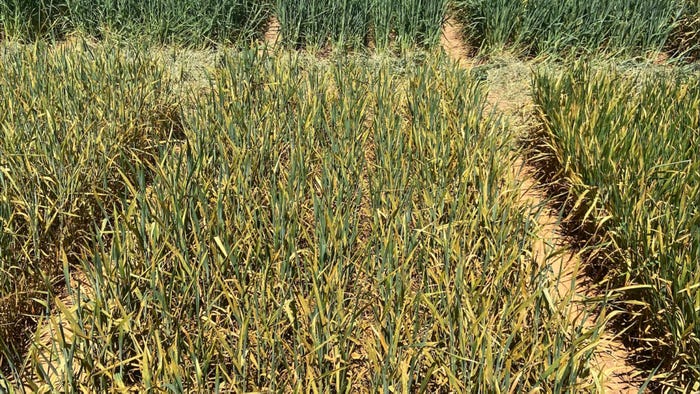
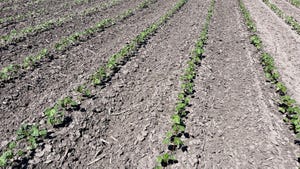
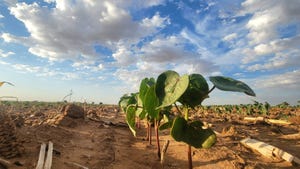
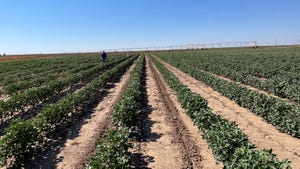
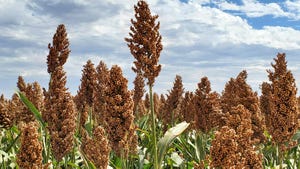
Growing interest has been sparked by some success of winter canola on the Rolling Plains. At twice the price of wheat, it looks promising, but it also has twice its share of problems, Texas AgriLife Research scientists said.

Dr. John Sij, AgriLife Research cropping systems coordinator and agronomist, and David Jones, a research associate, have been planting canola on the AgriLife Research station south of Chillicothe for seven years now.

Canola stands for Canadian Oil Low Acid, Sij said.

They want to caution producers that canola, like any crop, has its own set of issues to consider, and that it is important to read as much literature as possible to know management expectations before anything is planted.

"I just hope this year doesn't give people a false sense of security," Sij said, speaking of the 3,000-plus pounds-per-acre yields realized in the National Winter Canola Variety Trial.

"You could get $400 per acre based off yields and price this year at harvest, but those are not typical," he said. The average yield is closer to 1,500 pounds per acre, or $220 per acre.

"It's kind of new to this area," Sij said, although canola has been around for awhile. "It's a good rotation crop. Producers are already using Roundup Ready canola to clean up wheat fields if they have grass problems."

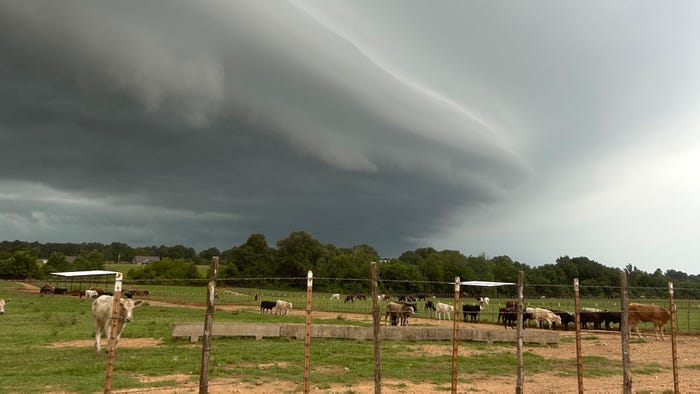
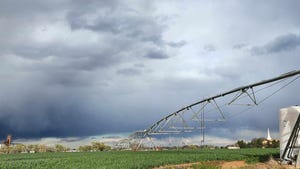
Jones said in the seven years it has been planted on the research fields, two crops were failures due to freeze and one year it lodged under heavy rains and severe storms. This past year was the best of the seven by far.

The canola at the research station is planted as a part of the National Great Plains Winter Canola Variety Trials, coordinated by Kansas State University. Jones planted 78 varieties in two different trials this past year. The overall trial average yield was 2,700 pounds per acre.

Winter canola is low in erucic acid, so it is not like other rapeseeds that are of concern, Sij said. The erucic acid has been bred out of the summer and winter varieties. Canola oil is touted as "healthy" oil, and that is part of the reason it is bringing about double the price of wheat right now.

In the Rolling Plains of Texas, canola is planted about the same time as wheat but has a narrower planting window. Canola should be planted in late September to about mid-October.

"It has to be early enough to establish winter-hardiness," Jones said, "which means about four weeks before the first freeze."

While the industry is trying to get more of the crop grown, it is still planted on a limited enough acreage that the closest market is in Oklahoma City, the researchers said.

However, if a producer can plant enough acreage or volume and produce the same amount of bushels per acre as wheat – but at twice the price – it is of interest, said Jones.

"But management is much more intense," he said. "You have to be more timely than you are with wheat."

Concerns producers should consider the short planting window and potential aphid damage before planting and entering into a contract, Sij said.

"Aphid populations can explode and they will do significant damage," he said. "You have to stay on top of it."

Also, late winter freezes and drought are problems. The crop blooms from late March into April and a freeze during that period can hurt production.

"It also requires moisture," he said. "The plant has big leaves and drought can impact its survivability.”

Key times for moisture are at plant establishment and as it comes out of dormancy and begins to bloom, Jones said.

Harvest also presents another set of concerns. Canola has pods which can shatter easily, so producers have to be careful how they harvest it. Before it gets completely mature, it can be rolled with a pusher, which causes it to dry and allows a more efficient harvest, Sij said.

Discuss this article 0

Post new comment

Sign in or Register to use your South West Farm Press ID

(optional)
CAPTCHA
This question is for testing whether you are a human visitor and to prevent automated spam submissions.
Incorrect please try again
Enter the words above: Enter the numbers you hear:
Sign Up
Sign Up!

For the South West Farm Press Newsletter

Keep up with the latest news with our daily newsletter

Continuing Education Courses
New Course

Biopesticides are increasingly being recommended as components of Integrated Pest Management (IPM) programs in the production of non-organic high-value specialty crops like fruit, nut, vegetable, vine, ornamental and turf.

New Course

This course covers a wide range of options to effectively control weeds in cotton and reduce the risk of weed resistance management.

New Course

Integration of a new mode of action compound like Coragen into IPM and IRM programs to control Lepidoptera in leafy greens, fruiting vegetables, peppers and brassica or cole crops is always welcome.