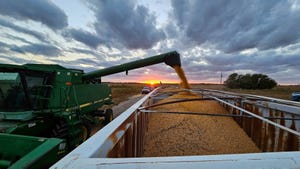
By David Bennett, Farm Press Editorial Staff
On Wednesday (March 10), the Senate passed the “American Workers, State, and Business Relief Act of 2010.” ...
By Shawn Wade, Plains Cotton Growers
Two months into the Supplemental Revenue Assistance Payments Program (SURE) sign up period, it appears most of the program's implementation kinks are finally on their way to being ironed out by the USDA Farm Service Agency....
By Ron Smith, Farm Press Editorial Staff
A panel of agricultural commodity association representatives waded into some deep issues, including cap and trade legislation, water use restrictions, crop insurance, trade restrictions and biofuels during the Texas Alliance for Water Conservation conference in Muncy, Texas....
The House Committee on Agriculture approved two bills for floor consideration and adopted the annual budget views and estimates letter, which outlines the Committee's budget recommendations for the federal agencies and programs under its jurisdiction for fiscal year 2011....
By Forrest Laws, Farm Press Editorial Staff

Farmers may have yet another chance to win meaningful disaster assistance for their 2009 waterlogged crops, the chairman of the National Cotton Council told producers attending the Mid-South Farm and Gin Show....
By David Bennett, Farm Press Editorial Staff

Following nearly a decade of litigation, a $1.25 billion agreement has been struck between the USDA and a class consisting of black farmers. Congress is now being asked to provide the needed funds and several prominent farm-state politicians seem keen to do so....
The USDA-Natural Resources Conservation Service (NRCS) has announced a special initiative of $50 million, of which Texas will be receiving more than $4.4 million, to provide financial assistance for conservation practices to growers transitioning to organic farming or who are already certified for organic agriculture under new provisions of the 2008 Farm Bill....
The National Cotton Council said today that President Obama’s FY2011 USDA budget ignores the extensive changes to production agriculture support that were embodied in the Food, Conservation, and Energy Act of 2008. ...
By Forrest Laws, Farm Press Editorial Staff

Farm organizations are welcoming the decisions of the chairman and ranking member of the Senate Agriculture Committee to support a Senate resolution opposing EPA’s plan to regulate carbon dioxide and other greenhouse gases through the Clean Air Act....
The USDA Natural Resources Conservation Service (NRCS) is accepting applications for the Farm and Ranch Lands Protection Program (FRPP), a voluntary conservation program that helps farmers and ranchers keep their land in agriculture....
1 | 2 | 3 | 4 | 5 | 6 | 7 | 8 | 9 | 10 | 11 | 12 | 13 | 14 | 15 | Next
advertisement
This course covers a wide range of options to effectively control weeds in cotton and reduce the risk of weed resistance management. It is accredited for hours/units for licensed/accredited applicators in 7 U.S. Cotton Belt states (Florida, Georgia, New Mexico, Oklahoma, Texas, South Carolina an d Tennessee. CCA credit is pending).
Integration of a new mode of action compound like Coragen into IPM and IRM programs to control Lepidoptera in leafy greens, fruiting vegetables, peppers and brassica or cole crops is always welcome. This online CE accredited course details how best to use this new mode of action insecticide in intensive vegetable production. It is accredited by the Certified Crop Adviser (CCA) program and by state agencies for licensed applicators in Texas, Georgia, Florida, New Jersey and Pennsylvania.
Keeping crop protection chemicals on the crop for which they are intended has been a cornerstone of farming not only to protect neighboring crops, but to not waste money allowing products to drift off the intended target. This accredited online continuing education course covers the critical elements of spray drift management.
American agriculture exports 20 to 30 percent of its production annually. For specific commodities, the percentage is much higher. When recommending and applying pest management products for crops, license Pest Control Advisers (PCAs) and applicators and farmers must be aware of which products applied are in compliance with Maximum Residue Limits (MRLs) established by foreign customers. This CE course details the MRL issue and why compliance is critical to marketing into world trade.