Cattle producers should consider retained ownership

Oct 15, 2009 10:36 AM, By Blair Fannin, Texas A&M University

Strategy is promising with possible market price increase.

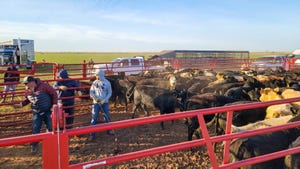
Recent rainfall has been beneficial to Texas small grains pastures, and cattle producers may want to weigh their options when marketing calves in 2010, according to a Texas AgriLife Extension Service economist.

There’s potential for increased profit margins if cattle producers consider retained ownership ventures, said Jose Pena, AgriLife Extension economist in Uvalde in his recent economic report.

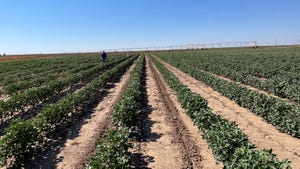
“Relatively weak wheat prices in relation to recent highs may mean that wheat farmers may prefer to graze small grains this winter/spring,” he said. “Abundant supplies of small-grain pastures may be available this spring.”

He said current cattle market prices suggest that retained-ownership enterprises this fall/winter may be profitable. Retained ownership bypasses the traditional marketing of calves at local auction facilities, opting to place calves on winter pasture for added gain through a contract.

Pena said cattle-gain contracts on small grains last fall was approximately 45 cents to 55 cents per pound of gain. However, since then prices for energy and fertilizer have decreased as have wheat and corn prices.

Pena said that when considering retained ownership, to carefully consider the risks involved.

“High production and market vulnerability risks indicate that retained-ownership enterprises will require careful planning, monitoring and a review of alternatives,” he said. “Alternatives include comparing the value of calves now versus the potential additional profits from retaining owned calves, or buying calves to carry through the stocker/feeder phase on native, small grain or ryegrass pastures and/or feedlot.”

Meanwhile, beef inventory numbers are declining. Prices could improve as confidence in the economy is restored, according to Pena. U.S. cattle inventory on July 1 decreased 1.5 million head from July 2008. The 2009 calf crop is estimated at 35.6 million head, down 513,000 head from a calf crop of 36.1 million in 2008 and down 1.76 million head from a calf crop of 37.4 million head in 2007.

“Feeder supplies will remain in short supply unless feeder-cattle imports from Mexico increase,” Pena said. “Scarce supplies of cattle will keep a base support for prices, especially for feeder cattle ready to enter feedlots as feedlots are operating below capacity.”

The U.S. Department of Agriculture Cattle on Feed report indicated an inventory of 9.8 million head on feed Sept. 1, down 1.2 percent from 9.9 million head Sept. 1, 2008 and down 4.1 percent from two years ago.

“Cattle marketings as of the end of August were down 4.1 percent from a year ago to the lowest fed cattle marketing’s since the series began in 1996,” Pena said.

With stronger cattle prices, retained ownership or buying stocker calves this fall “will provide an opportunity to add value to the calves through additional gain from relatively manageable forage or cost of gain through a feedlot,” Pena said.

To reduce price risk, Pena said a price floor for steers could be set by selling a feeder cattle-futures contract or buying a put option (option to sell a futures contract).

“A put option contract with a strike price of 99 cents per pound with a May ’10 delivery date would cost about 4.2 cents a pound,” he said.

After option costs and commissions are deducted, Pena said a price base of 95 cents a pound could be set with a May 2010 put options contract.

For more on retained ownership strategies, visit the AgriLife Extension Bookstore and view publication L-5246, Retained Ownership Strategies for Cattlemen.

Get Copyright ClearanceWant to use this article? Click here for options!
© 2009 Penton Media, Inc.


Latest Jobs

resources

events icon events

product info icon tradeshows

tradeshow icon digests

research icon photos

Continuing Education

Accredited in Florida, Georgia, New Mexico, Oklahoma, Texas, South Carolina and Tennessee:


(New Course)
Weed Resistance Management in Cotton

This course covers a wide range of options to effectively control weeds in cotton and reduce the risk of weed resistance management. It is accredited for hours/units for licensed/accredited applicators in 7 U.S. Cotton Belt states (Florida, Georgia, New Mexico, Oklahoma, Texas, South Carolina an d Tennessee. CCA credit is pending).

(New Course)
New Mode of Action Chemistry for Vegetable Production

Integration of a new mode of action compound like Coragen into IPM and IRM programs to control Lepidoptera in leafy greens, fruiting vegetables, peppers and brassica or cole crops is always welcome. This online CE accredited course details how best to use this new mode of action insecticide in intensive vegetable production. It is accredited by the Certified Crop Adviser (CCA) program and by state agencies for licensed applicators in Texas, Georgia, Florida, New Jersey and Pennsylvania.

This course is accredited in Texas, Oklahoma, New Mexico, Virginia, West Virginia and Wyoming as well as for CCA credits:

(New Course)
Spray Drift Management

Keeping crop protection chemicals on the crop for which they are intended has been a cornerstone of farming not only to protect neighboring crops, but to not waste money allowing products to drift off the intended target. This accredited online continuing education course covers the critical elements of spray drift management.

Back to Top

Browse Print Issues

Additional Resources

subscribe to Farm Press Daily Delta Farm Press Southeastt Farm Press Western Farm Press