Global warming: Fact or myth?

2011 was a year of unexpected and devastating climate extremes -- or not

What is in this article?:

  • Global warming or climate change continues to stir controversy in many circles.
  • Proponents and deniers can't seem to find much to agree on.
  • Farm Press Contributing Editor Logan Hawkes examines some of the numbers that keep stirring the pot, so to speak.


When it comes to a changing climate it has been said that ‘proof is in the pudding’, supposedly meaning a close examination of statistical data will quickly and clearly reveal all the facts. But statistics can be misleading at best, and in some cases downright confusing, as in the case of last year’s climate data. 

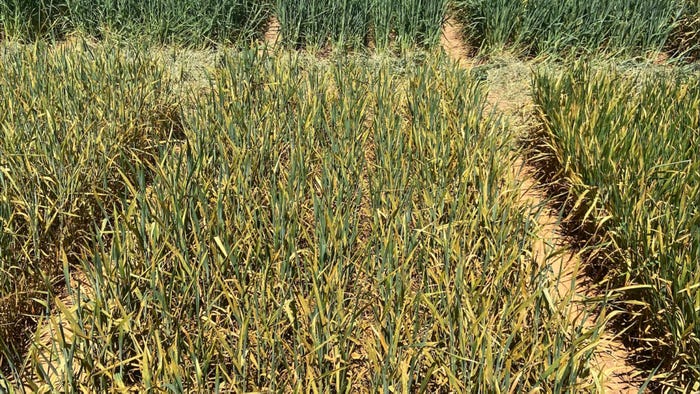
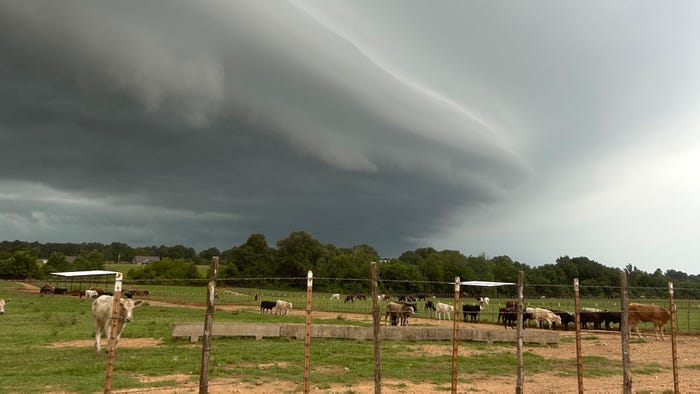
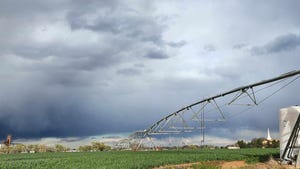
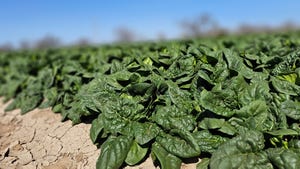
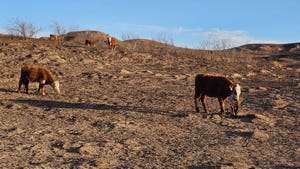
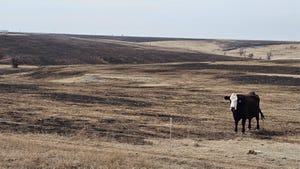
As most of us know, 2011 was a tough weather year for many U.S. farmers. Exceptional floods, historical droughts, intense and widespread incidents of wildfire, for example, are being credited with costing U.S. agriculture billions of dollars in losses last year.

But recently released climate statistics for 2011 by the National Oceanic and Atmospheric Administration’s National Climatic Data Center indicate that in spite of weather disasters that plagued large areas of the nation, temperature and rainfall averages and other relevant climate data was not significantly different than those for most years.

Or was it? You be the judge.

The average temperature last year for the contiguous U.S. was 53.8 degrees F, just one degree F above the 20th century average. In spite of the single degree difference though, 2011 is proving to be the 23rd warmest year on record. Also by contrast, precipitation across the nation last year averaged near normal, masking record-breaking extremes in both drought and flooding.

To confuse things more, globally, La Niña events helped keep the average global temperature below recent trends. As a result, 2011 tied with 1997 for the 11th warmest year on record and, surprisingly, it was the second coolest year of the 21st century to date, but tied with the second warmest year of the 20th century.

Are you confused yet?

Digging deeper into the statistical data for the U.S., it becomes apparent that while many areas suffered extreme weather, there was a balancing of extremes taking place that make 2011’s climate statistics look more normal than they actually are.

Discuss this Article 2

Tony Sidaway (not verified)
on Jan 26, 2012

The public confusion will probably continue for a while yet, but statistically the trend of increasing global average temperatures is already well established. So why are some recent years cooler than those at the turn of the century? Because natural variation is enough to overcome the effect of the trend over periods shorter than two or three decades.

Natural variation in the time period we're concerned with here comes from one-off events such as the occasional very large volcanic eruption which puts lots of dust into the atmosphere and cools the earth down a little, cycles in solar output over an 11 year and 22 year period, and the quasi-periodic El Niño-Southern Oscillation (ENSO).

But notice that the global average temperature over the past decade has been significantly warmer than in the previous decade--to the extent that of the twelve hottest years only one is in the 1990s. The 1990s, in turn, were warmer than the decade before that, and so on. This observation gives a crude illustration of the warming trend. Scientists use slightly more elaborate methods, such as a moving average with a fixed window, to smooth out natural variation. Last year was cool compared to most years, but it was the warmest La Niña year on record according to NOAA's figures. 1997, which was a little cooler 2011, was a warm El Niño year, the second warmest year of the 1990s. So now what counted as warm just 15 years ago surprises us because it is cool. It's a bit like that story about slowly boiling a lobster.

stephen weber (not verified)
on Jan 27, 2012

For those you understand the mathematical term "Average" there is no confusion.

The global trends are all set that last year should have been one of the coolest. And the fact that it turned out to be one of the hottest in history clearly shows Global Warming.

When a few years ago Global Warming was becoming a real voice the argument was that the reason each year was so hot was due to the fact that all of these trends were in their hot stage.

Trends go from hot to cold to hot to cold through the years, A few years ago the critics of Global Warming predicted that the Average Temperature would clearly go down with those trends. And this year for instance according to them it should have been a cold year , and certainly not one of the hottest years in history.

But that isn't the case. It is still hotter. So there should be no more confusion. But people are people and we probably will have to live through several more cycles of cold to hot to cold to hot with the average temperature rising continuously , before they will call a spade a spade.

Post new comment
Sign In or register to use your Southwest Farm Press ID

(optional)

Continuing Education Courses
This CE course is accredited for hours in Texas, Oklahoma and New Mexico. The content focuses...
New Course
The 2,000 member Weed Science Society of America’s (WSSA) Herbicide Resistance Action...
New Course
The course details six of the primary diseases affecting citrus: Huanglongbing (Citrus...

Newsletter Signup