Horse processing is highly emotional property issue

Mar 19, 2007 10:02 AM, By Ron Smith
Farm Press Editorial Staff


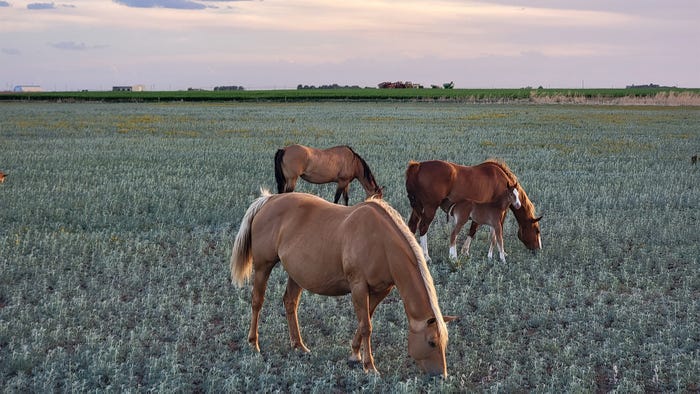
Charlie Stenholm allowed that many in his audience at the recent Texas Ag Forum in Austin would not agree with his stance on what he described as an emotional issue. He said it’s not something that’s likely to end up in the next farm law.

But Stenholm, former U.S. Representative and ranking member on the House Agriculture Committee and now an agriculture consultant in Washington, said denying horse owners the option of taking unwanted horses to a processing plant, where they are slaughtered and shipped to foreign countries for use as food, restricts property rights.

“The best way to end a horse’s life is humanely, with a veterinarian present,” Stenholm said. That’s mandated in processing plants, he said.

Horses are not processed for food for consumption in the United States. Stenholm said 80 percent of the horse industry agrees that processing plants should be one option for disposing of unwanted horses. “Any horse owner who does not choose to receive a value for (unwanted) horses don’t have to,” he said. “But it’s a property rights issue similar to water rights.”

He said if horse owners prefer to consider their animals as pets they would forfeit the tax deductions they receive for farm animals. “The Humane Society and People for the Ethical Treatment of Animals (PETA) have a different opinion. But if they care about the welfare of horses, what do they recommend we do with more than 100,000 if we don’t maintain a market of last resort?” Stenholm said many wild horses end up on feedlots, ranches and care facilities, at taxpayer expense. “Can we afford that?”

He said people don’t like to think about what it’s like for an animal to die a natural death in the wild. “It’s often gruesome,” he said.

He said it is important to the horse industry, which counts more than 9 million horses at a value of more than $9 billion, that the Texas law (banning processing) be repealed. “Horse owners have the best interest of their animals in mind,” he said. “We should return the option of selling to a processing plant. This is an emotional issue.”

email: rsmith@farmpress.com

Get Copyright ClearanceWant to use this article? Click here for options!
© 2008 Penton Media, Inc.


Latest Jobs

resources

events icon events

product info icon tradeshows

tradeshow icon digests

research icon photos

Continuing Education

For Texas and Oklahoma Licensed Applicators

A free online continuing education course on spray drift management accredited by the Texas and Oklahoma departments of agriculture.

CCA Continuing Education

A free American Society of Agronomy-accredited one-CEU course on spray drift management.

ACCREDITED IN CALIFORNIA ONLY:


Almond Pest Management

Get the latest info on almond insect pest management and earn 2 hrs. CE DPR and CCA credit in California.

California Groundwater Protection Regulations

Earn 2 hrs. in California laws and regs CE and learn how to protect California groundwater supplies.

Powdery Mildew Control in California Grapevines

Learn about the No. 1 grape disease in California; earn 2 California CE hours.

ACCREDITED IN CALIFORNIA AND ARIZONA:


Insecticide Resistance Management in Agronomic and Row Crops

A 3-hr. CE approved for California and Arizona licensees and CCAs in both states.

Agronomic Weed Resistance Management in Row Crops, Trees Nuts and Vines

Weeds Resistance Management is approved for 3 hours of CE credit for all California and Arizona licensees and Certified Crop Advisers.

Lepidopterous Pest Management/ Pesticide Safety

This course is approved for 2 hours in Arizona and California (1 hr. of laws/regs; 1 hour Other) and for CCAs.

Managing Spray Drift to Minimize Problems

2-hrs laws and regs for California licensees; 2 hours in Arizona and for CCAs.

Back to Top

Browse Print Issues

Additional Resources

subscribe to Farm Press Daily Delta Farm Press Southeastt Farm Press Western Farm Press