Share

South-central Kansas producers are growing cotton

Jan 7, 2005 11:12 AM, By David Bennett

“Historically, this area — south-central Kansas through north-central Oklahoma — has been wheat and cow country,” said Dusty Albright. “That’s been the case for 80 years, at least."

It’ll come as no surprise that Conservation Security Program contracts were recently awarded to cotton farmers. The surprise may come in knowing the farmers in question call south-central Kansas home.

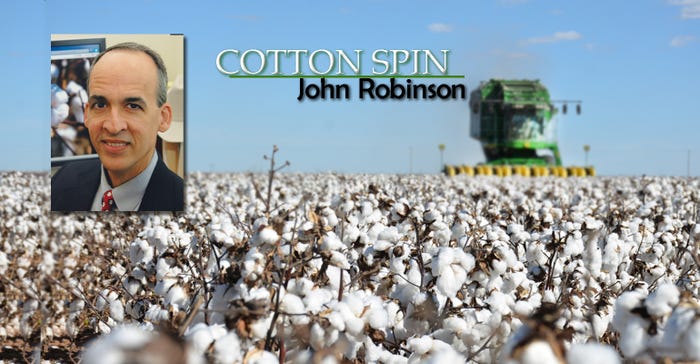
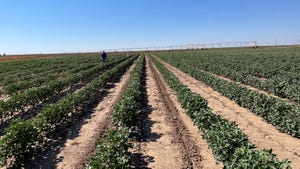
Around Anthony in Harper County, Kans., there’s no expectation cotton will replace fields of golden wheat or chase off cattle, but there are substantial patches of fluffy white scattered throughout. Still, growing cotton here is incongruous, admit those tending it.

Something new “I started farming cotton in 1999,” said Ralph Arnet, who had 200 acres of the crop this year. “In the late 1990s, quite a few stripper varieties were adaptable to this area. They were typically shorter season, early varieties. We were also looking at storm-proof varieties. Later, when Roundup Ready technology came on, we found it fit well here. Those are the main reasons we’re able to grow cotton.”

Dusty Albright began growing cotton in 1997. “We were looking for another rotation crop, and cotton fit that for us. We were almost all wheat. We began having trouble with rye and cheatgrass — a pretty common complaint around here — and were looking to break that cycle. Now, we’re growing milo, cotton, soybeans, wheat, and a little corn. We planted around 250 acres of cotton this year.

“We don’t have a set cropping rotation. A lot depends on market conditions. If wheat is $5, you’d be silly to plant anything but wheat. That said, I like to plant cotton after milo. I don’t know why, but we’ve had great experiences with that.”

Arnet’s cotton acreage fluctuates; this year it was down. “The biggest problem with expansion is we don’t own our harvesting equipment. I decided to limit cotton acres or go whole-hog — buy equipment and plant more acres. Right now, on my no-till or minimum-till ground, I’m in a wheat-cotton-grain sorghum rotation. On the cultivated ground, we go wheat-to-wheat with milo — or some other crop, depending on markets at the time — thrown in to change things up a little.”

Both farmers believe the big advantage of cotton is to break the monotony.

“Historically, this area — south-central Kansas through north-central Oklahoma — has been wheat and cow country,” said Albright. “That’s been the case for 80 years, at least. This is some of the best hard red winter wheat country in the world. That’s what this area is known for.”

But with the arrival of Freedom to Farm, “we had more and more trouble,” said Arnet. “There was fencerow-to-fencerow cultivation — no set-asides, nothing like that. And we’ve also had problems with rye and cheat(grass). That’s pushed many to a new crop rotation.”

Giving it a shot Cotton came on strong as an alternative in the mid-1990s, when several cotton seed companies were involved with Extension specialists in a cotton seminar at Anthony’s high school. That meeting, say the men, sparked much interest. Not long after, both decided to give cotton a shot.

“Back in 1997-98, we were having bad droughts,” said Albright. “Wheat was only making 20 or 30 bushels, and prices were low. That made farmers more receptive to trying cotton.”

What was the learning curve like? “Way steep, drastic,” said Arnet. “Weeds were what we had to learn to deal with. We have gotten much better with control, but when we first started, we knew nothing about a Roundup Ready crop. There weren’t a lot of technical folks to help check the crop closely or tell us what to do. Our farming neighbors didn’t know — there just weren’t many people to help.”

Some guidance came from Oklahoma State University. “They had a few cotton folks come up for the first couple of years. They helped school us on cotton. After that, a couple of professional crop firms came in and began offering their services.”

The last two years, there’s been a slight decrease in cotton acres around Anthony. But in surrounding counties, acres have increased. “If you go west, many irrigated acres are going to cotton,” said Arnet. “There’s good potential there for the crop: a hotter climate with good water. I hope the cotton acres increase here in Harper County. I don’t know if that will happen with such high cattle prices, though.”

Battling a mindset Having raised wheat and cattle successfully for decades, many area residents don’t understand farmers turning to cotton. “To be honest, one thing we battle against is the wheat/cattle mindset,” said Albright. “When you go to your landlord wanting to try something new, you can meet a lot of resistance. We’re fortunate that we own enough of our own land. That allowed us to experiment growing cotton.”

Arnet is the likeliest candidate to buck the farming norm. Having grown up in southern California, he came to Kansas in the late 1970s with little farming knowledge. He still pines for the beach. “I really like Kansas, but I miss the beach badly! My parents had grown up on a farm, but I knew nothing of the lifestyle. I met my wife in college and ended up back in her home state.

“I always felt I had kind of an advantage because I hadn’t grown up on the farm. I was an outdoors person, so farming suited me well. But my approach to things was ‘will this work?’ versus ‘how did Granddad do it?’ That’s not to fault Granddad, at all — I just came at it a bit differently.”

Albright grew up in northeast Kansas. Like Arnet, he met his wife in college and ended up farming with her father. Albright speaks of his recently deceased father-in-law in glowing terms. “He’s one of the most progressive people I’ve ever known. He died just a month ago. He taught me a lot about farming here — but he wasn’t afraid to go against the crowd. “For years, he stressed to me, ‘If you take care of the ground, it’ll return the favor.’ And we live by that — that’s a large reason why we got the CSP contract.”

CSP Both Albright and Arnet had “the goods” in place before Terry Hodgson arrived in Anthony 18 months ago. “They’ve been improving their land for a long time,” said Hodgson, a National Resources Conservation Service district conservationist. “It was just a matter of them showing me what they were doing and working through the eligibility process. In the end, both of these guys had Tier 3 contracts — the highest attainable.

“This area is tough to get away from continuous wheat. Running cattle on wheat during the winter is this area’s backbone. It’s a hard sell to get folks away from that. Dusty and Ralph aren’t the only farmers growing cotton who are CSP participants. We’ve got six contracts in the county.”

Albright said his operation has been in a no-till system for eight years and works “hard on terraces every year to maintain proper water flow. We work on water holes. We don’t like low spots in fields, and we’ve taken care of them in large measure.”

Conservationism is an absolute, said Arnet. “To be involved in programs like CSP, you must be a conservationist. With more conscientious growers and these programs, we’ve seen an explosion in wildlife and an overall improvement in environmental conditions in this area.”

Both men now lease land to hunters and offer one major tip for those seeking CSP contracts: keep great records. “You have to have a plan and show how you’re getting to your goal,” said Arnet. “You must be an impressive record-keeper. Guys planning to enroll in CSP should strive for perfect records: yield data, fertilizer applications, chemical applications, everything.”

And begin immediately, said Albright. “Don’t start keeping quality records a few months before you apply for CSP. That won’t swing it. You’ve got to have at least a couple of years’ worth to get into the program.”

Hodgson said Secretary of Agriculture Ann Veneman’s motto for the CSP program was “to reward the best and motivate the rest.” It’s interesting to me to see how precisely that motto fits. It truly is a program for stewards of the land.”

e-mail: dbennett@primediabusiness.com

Get Copyright ClearanceWant to use this article? Click here for options!
© 2010 Penton Media, Inc.


Latest Jobs

Texas wheat harvest promising

View the new video archive page!

Subscribe to RSS headline updates from:
Powered by FeedBurner

Continuing Education

Accredited for Certified Crop Adviser (CCA) units and hours/credit in Texas, New Mexico, Oklahoma, Tennessee, South Carolina, Virginia, Florida, Georgia, Maine and Delaware:


Weed Resistance Management in Cotton


This course covers a wide range of options to effectively control weeds in cotton and reduce the risk of weed resistance management. It is accredited for hours/units for licensed/accredited applicators in 7 U.S. Cotton Belt states (Florida, Georgia, New Mexico, Oklahoma, Texas, South Carolina an d Tennessee. CCA credit is pending).

Accredited for continuing education/recertification hours/units for pest control advisers/licensed applicators in California, Arizona, Georgia, Texas, Florida, Virginia, Pennsylvania, New Jersey, Delaware, Oregon, Maine, Washington and for Certified Crop Advisers:


New Mode of Action Chemistry for Vegetable Production

Integration of a new mode of action compound like Coragen into IPM and IRM programs to control Lepidoptera in leafy greens, fruiting vegetables, peppers and brassica or cole crops is always welcome. This online CE accredited course details how best to use this new mode of action insecticide in intensive vegetable production. It is accredited by the Certified Crop Adviser (CCA) program and by state agencies for licensed applicators in Texas, Georgia, Florida, New Jersey and Pennsylvania.

This course is accredited in Texas, Oklahoma, New Mexico, Virginia, West Virginia and Wyoming as well as for CCA credits:


Spray Drift Management

Keeping crop protection chemicals on the crop for which they are intended has been a cornerstone of farming not only to protect neighboring crops, but to not waste money allowing products to drift off the intended target. This accredited online continuing education course covers the critical elements of spray drift management.

This course is accredited for CE hours/units in California, Arizona, Florida, Georgia, Texas, Oklahoma, New Jersey, Delaware, Maryland and for Certified Crop Advisers.:


The ABCs of MRLs

American agriculture exports 20 to 30 percent of its production annually. For specific commodities, the percentage is much higher. When recommending and applying pest management products for crops, license Pest Control Advisers (PCAs) and applicators and farmers must be aware of which products applied are in compliance with Maximum Residue Limits (MRLs) established by foreign customers. This CE course details the MRL issue and why compliance is critical to marketing into world trade.

Back to Top

Browse Print Issues

Additional Resources

subscribe to Farm Press Daily Delta Farm Press Southeastt Farm Press Western Farm Press