Asian rust outbreak unlikely for Texas soybeans in 2005

Jun 16, 2005 11:58 AM, By Ron Smith

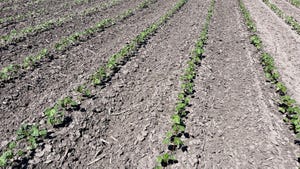
“With hot, dry weather dominating I don’t expect to see Asian soybean rust this year,” says Texas Extension plant pathologist Tom Isakeit.

Likelihood of an Asian rust outbreak in Texas soybeans seems relatively low this year, says a Texas Extension plant pathologist.

“We just don’t see much going on now,” says Tom Isakeit from his College Station office. Rust identified in Florida and Georgia earlier apparently has not spread to other parts of the country.

“We’re not certain if the tropical storm (that recently went through part of the Southeast) will spread the pathogen or not. We will not know for a week or more.” He says Texas soybean farmers should be safe this year with the possible exception of late-planted beans in the south vulnerable if spores blow in from South America on late summer hurricanes.

“I don’t expect much crop loss, even if that occurs,” he says.

Most of the state has warmed up enough to prevent infection, Isakeit says. “With hot, dry weather dominating I don’t expect to see Asian soybean rust this year.”

Conditions in the Texas Panhandle favor infection more than any other locale this late but he says the pathogen is unlikely to jump over several southern states and hit that far north.

“If we had an outbreak in South Texas with epidemic conditions, we might be concerned,” he says. “I don’t see that happening this year.”

Isakeit says even if spores do come in from South America they are unlikely to survive a Texas winter. “We don’t have kudzu (another plant host) that will survive winterkill,” he says. “In Texas, we would have to get re-infection every year. If we have a fall outbreak (on group 8 or group 9 varieties) I don’t expect yield losses and I don’t anticipate carryover to next year.”

Based on crop maturity, weather conditions, absence of identified Asian rust in the state, and the low price for soybeans, Isakeit sees “no rationale for preventive fungicide applications. “Our policy has been that if we detect Asian soybean rust in Texas, we will assess the situation on a regional basis. Before we would recommend a spray program we would have to see a tangible threat. We don’t see that happening this year.”

But Isakeit is watching another potential soybean problem that could mean significant yield loss if it gets a foothold. He says green pod syndrome showed up in scattered locations last year, from Victoria in south Texas to Paris in the northeast corner. The syndrome, characterized by soybean pods not maturing, may be linked to stinkbug damage or to some organism the insect transmits into the plant.

“If we see it again this year, we’ll analyze samples to see what we’re dealing with,” Isakeit says. “Yield loss can be substantial. Soybean pods never mature and make virtually no yield.”

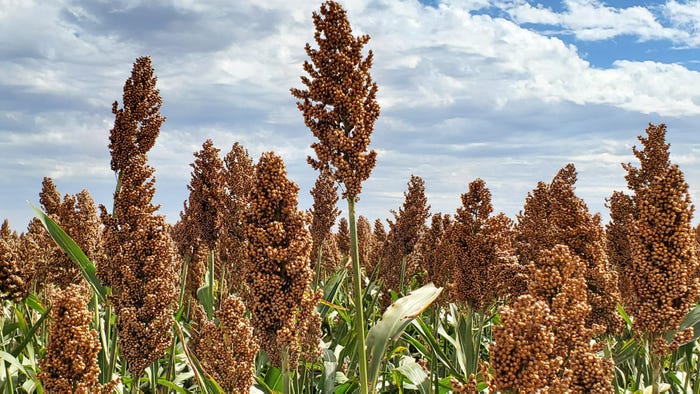
Studying sorghum downy mildew also takes a chunk of his time. “We found pathogens last year in a Wharton County sorghum field that showed host resistance. This year, we have sorghum in that same field and are evaluating germplasm.”

He says observers reported less than 1 percent infection in the field last year. This year, they’re seeing 25 percent to 30 percent. “It is quite noticeable in some susceptible hybrids,” he says. “That’s a big increase in just one year.”

Potential loss from that big an increase provides another good reason to rotate, he says. “We’re finding that we can’t depend solely on plant resistance.”

Isakeit says he’s a bit concerned that the mildew has shown up in nearby Matagorda County.

e-mail: rsmith@primediabusiness.com

Get Copyright ClearanceWant to use this article? Click here for options!
© 2009 Penton Media, Inc.


Latest Jobs

resources

events icon events

product info icon tradeshows

tradeshow icon digests

research icon photos

Continuing Education

Accredited in Florida, Georgia, New Mexico, Oklahoma, Texas, South Carolina and Tennessee:


(New Course)
Weed Resistance Management in Cotton

This course covers a wide range of options to effectively control weeds in cotton and reduce the risk of weed resistance management. It is accredited for hours/units for licensed/accredited applicators in 7 U.S. Cotton Belt states (Florida, Georgia, New Mexico, Oklahoma, Texas, South Carolina an d Tennessee. CCA credit is pending).

(New Course)
New Mode of Action Chemistry for Vegetable Production

Integration of a new mode of action compound like Coragen into IPM and IRM programs to control Lepidoptera in leafy greens, fruiting vegetables, peppers and brassica or cole crops is always welcome. This online CE accredited course details how best to use this new mode of action insecticide in intensive vegetable production. It is accredited by the Certified Crop Adviser (CCA) program and by state agencies for licensed applicators in Texas, Georgia, Florida, New Jersey and Pennsylvania.

This course is accredited in Texas, Oklahoma, New Mexico, Virginia, West Virginia and Wyoming as well as for CCA credits:

(New Course)
Spray Drift Management

Keeping crop protection chemicals on the crop for which they are intended has been a cornerstone of farming not only to protect neighboring crops, but to not waste money allowing products to drift off the intended target. This accredited online continuing education course covers the critical elements of spray drift management.

Back to Top

Browse Print Issues

Additional Resources

subscribe to Farm Press Daily Delta Farm Press Southeastt Farm Press Western Farm Press