Soybean rust fears premature in Texas

Aug 18, 2005 10:31 AM, By Kay Ledbetter

Brown spot, bacterial blight, bacterial pustule, frogeye leaf spot and downy mildew all produce “rust-like” lesions on soybean leaves.

Diseases resembling Asian soybean rust have caused concerns among Texas Panhandle producers in recent weeks.

However, Tom Allen, assistant research scientist and head of the Plant Disease Diagnostic Laboratory with Texas Agricultural Experiment Station in Amarillo, says Asian soybean rust has not yet spread to the Texas Panhandle. “Also, we want to make sure everyone understands there is only one kind of soybean rust. It is known as Asian soybean rust,” Allen says.

In Asia, where soybean rust was first found, losses of up to 70 percent were reported. The United States’ first confirmation of disease was in Louisiana in 2004.

It has since been found in Alabama, Florida, Georgia and Mississippi, although most reports have identified susceptible weed hosts, and in soybean “sentinel plots,” Allen says. It has only been found in one producer’s field in Florida.

Sentinel soybean plots serve as an early indicator of disease development in each region, Allen says. This allows researchers and producers to respond to the disease in a timely manner. Most soybean sentinel plots are observed for soybean rust on a frequent basis, he says.

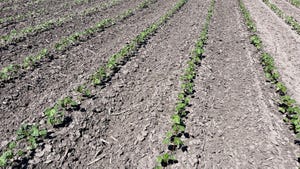
This year, the U.S. Department of Agriculture implemented sentinel plots in more than 30 states. Soybean plots were planted in the spring and will be observed throughout the growing season for soybean rust.

One problem with diagnosis is several other soybean diseases are similar in appearance, he says. Brown spot, bacterial blight, bacterial pustule, frogeye leaf spot and downy mildew all produce “rust-like” lesions on soybean leaves.

“The naked eye will not easily determine the differences; however, in the diagnostic laboratory these diseases can be differentiated,” Allen says.

Producers with a problem area should send plant samples to: Texas High Plains Plant Pathology Laboratory, c/o Tom Allen, Texas A&M University System Agricultural Research and Extension Center, 6500 W. Amarillo Blvd., Amarillo, Texas 79106.

Each sample should be double bagged in self-locking plastic bags. Send samples by the fastest method possible, ideally overnight, or bring them by the Experiment Station in Amarillo. Allen can be reached at (806) 677-5600.

When sending a sample, be sure to send more than one leaf, he says. Do not expose the samples to direct sunlight or high temperatures inside a plastic bag prior to mailing.

Producers can track the soybean rust situation at http://www.sbrusa.net. This Web site monitors where the disease is present and where researchers have scouted for the disease and not found it present, Allen says.

Get Copyright ClearanceWant to use this article? Click here for options!
© 2009 Penton Media, Inc.


Latest Jobs

resources

events icon events

product info icon tradeshows

tradeshow icon digests

research icon photos

Continuing Education

Accredited in Florida, Georgia, New Mexico, Oklahoma, Texas, South Carolina and Tennessee:


(New Course)
Weed Resistance Management in Cotton

This course covers a wide range of options to effectively control weeds in cotton and reduce the risk of weed resistance management. It is accredited for hours/units for licensed/accredited applicators in 7 U.S. Cotton Belt states (Florida, Georgia, New Mexico, Oklahoma, Texas, South Carolina an d Tennessee. CCA credit is pending).

(New Course)
New Mode of Action Chemistry for Vegetable Production

Integration of a new mode of action compound like Coragen into IPM and IRM programs to control Lepidoptera in leafy greens, fruiting vegetables, peppers and brassica or cole crops is always welcome. This online CE accredited course details how best to use this new mode of action insecticide in intensive vegetable production. It is accredited by the Certified Crop Adviser (CCA) program and by state agencies for licensed applicators in Texas, Georgia, Florida, New Jersey and Pennsylvania.

This course is accredited in Texas, Oklahoma, New Mexico, Virginia, West Virginia and Wyoming as well as for CCA credits:

(New Course)
Spray Drift Management

Keeping crop protection chemicals on the crop for which they are intended has been a cornerstone of farming not only to protect neighboring crops, but to not waste money allowing products to drift off the intended target. This accredited online continuing education course covers the critical elements of spray drift management.

Back to Top

Browse Print Issues

Additional Resources

subscribe to Farm Press Daily Delta Farm Press Southeastt Farm Press Western Farm Press