Precision farming could add dollars to grower's bottom line

Sep 16, 2005 9:45 AM, By Ron Smith

The first year includes using Global Positioning System technology to build a database, including yield information.

An extra $100 per acre for a cotton crop would be nothing to sneeze at. And with the cotton market stuck in the doldrums, most farmers will look at anything that offers a better chance to make a profit.

With precision farming, “The question we have to answer is, what’s it worth to a farmer?” says Tim Sharp, program chairman for a new precision farming initiative in Oklahoma. “We have to show value to farmers.”

Sharp, who is counting on doing that as he takes what he learned from years in Tennessee and applies it to Southwest growing conditions. He has been on the job in Oklahoma since February and has recruited farmer cooperators to enroll fairly large chunks of cotton acreage in his research program.

He makes a compelling case, based on data from Tennessee research begun in 1997, which indicate growers using precision farming strategies reduced production costs by 30 percent and increased yields by 15 percent. That’s over multiple years with variable rate technology.

“The key is to change the thought process,” Sharp said recently during a seminar at the Oklahoma State University Research and Extension Center in Altus.

That changed thinking includes looking at individual fields in new ways and identifying weak spots, strong spots, and spots that fall somewhere in between. When farmers identify those spots — management zones — they alter the way they apply production materials such as fertilizer, insecticides, and growth regulators.

The goal, Sharp says, is reduced costs and better yields.

He’s not certain he’ll get the same results in the Southwest, considering the more arid growing conditions, but he’s convinced Oklahoma cotton farmers can improve profit potential with variable rate agriculture.

“We may not match the figures we got in the Mid-South states, but we ought to improve enough to make it really interesting to growers.”

Irrigated cotton, he believes, will be similar to that in the Delta.

Sharp says his efforts will reflect “real world conditions — we’re not doing plot work. We have to work with farm systems and acreage that’s way beyond the typical size of research work. We need at least 1,000 acres of cotton to represent the real world, and enough fields to have replicated tests and to be representative of the area. We like 100-acre fields as opposed to small plots.”

This approach represents a different way to do research, “But when we extrapolate the numbers, we’re already at the farm scale.”

Agronomic problems

The premise of precision agriculture, Sharp says, is to use precision tools to identify problems and then fix them. “Before we can do the really technical stuff, we have to identify agronomic problems.”

The first year includes using Global Positioning System technology to build a database, including yield information. “If we’re lucky, fields are in good shape after that first year, and we can begin working on field-size plots the next summer.”

Sharp says farmers interested in precision farming invariably have two questions: “What do I need to do? Now, how do I do it?”

The answers, he says, reverse a trend in production agriculture that goes back 8,000 years. “Everything we’ve done in agriculture depended on increasing capital investments and reducing labor to achieve more efficient production.”

Those changes resulted in a negative impact on rural communities as jobs disappeared and folks moved away. Of some $600 per acre of crop inputs, he says, about $550 left the community (some to absentee landowners), leaving only about $50 in the local economy. A transition to precision agriculture, he says, requires a new, trained labor force to answer the two farmer questions: What do I need? and how do I do it?

“Precision agriculture consultants will play an integral role in the system,” Sharp says. “This could be the first time in 8,000 years that we improve crop production and efficiency by adding labor. It’s a paradigm change.”

Variable rate agriculture can’t bring rural communities back to where they were 50 years ago, he says, “But it can make significant improvements.”

Support from Oklahoma State University will be multi-discipline, says Sharp, who works from the Okmulgee campus. Agronomists, engineers, computer technicians, pest management specialists, and economists will work together to develop efficient precision agriculture systems.

He says row crop agriculture represents only one aspect of precision farming potential.

Animal ID

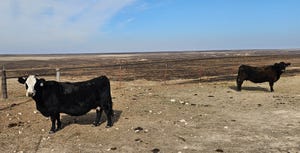
“Animal identification will also be critical.” Not only will animal ID systems allow the industry to track an animal from farm to consumer, helping to prevent “mad cow” and other diseases from entering the human food chin, but they will help identify exceptional genetics and use data to improve herds and food products.

“If we can identify a common trait or environmental event that affects a calf and then determine the quality of steaks from that animal, we can improve management systems,” Sharp says. “That kind of information can be extremely valuable, especially to a small operator.”

The basis of the entire precision farm initiative, Sharp says, is information. The more information a grower accumulates about his fields and his herds, the better he can manage his enterprises and the more efficient he can become.

e-mail: rsmith@primediabusiness.com

Get Copyright ClearanceWant to use this article? Click here for options!
© 2009 Penton Media, Inc.


Latest Jobs

resources

events icon events

product info icon tradeshows

tradeshow icon digests

research icon photos

Continuing Education

Accredited in Florida, Georgia, New Mexico, Oklahoma, Texas, South Carolina and Tennessee:


(New Course)
Weed Resistance Management in Cotton

This course covers a wide range of options to effectively control weeds in cotton and reduce the risk of weed resistance management. It is accredited for hours/units for licensed/accredited applicators in 7 U.S. Cotton Belt states (Florida, Georgia, New Mexico, Oklahoma, Texas, South Carolina an d Tennessee. CCA credit is pending).

(New Course)
New Mode of Action Chemistry for Vegetable Production

Integration of a new mode of action compound like Coragen into IPM and IRM programs to control Lepidoptera in leafy greens, fruiting vegetables, peppers and brassica or cole crops is always welcome. This online CE accredited course details how best to use this new mode of action insecticide in intensive vegetable production. It is accredited by the Certified Crop Adviser (CCA) program and by state agencies for licensed applicators in Texas, Georgia, Florida, New Jersey and Pennsylvania.

This course is accredited in Texas, Oklahoma, New Mexico, Virginia, West Virginia and Wyoming as well as for CCA credits:

(New Course)
Spray Drift Management

Keeping crop protection chemicals on the crop for which they are intended has been a cornerstone of farming not only to protect neighboring crops, but to not waste money allowing products to drift off the intended target. This accredited online continuing education course covers the critical elements of spray drift management.

Back to Top

Browse Print Issues

Additional Resources

subscribe to Farm Press Daily Delta Farm Press Southeastt Farm Press Western Farm Press