Column: Farmers brood over a future uncertain, uncontrollable

Nov 17, 2005 9:44 PM, By Ron Smith

They don’t believe trade agreements, at least agreements that resemble recent pacts, will solve the problems.

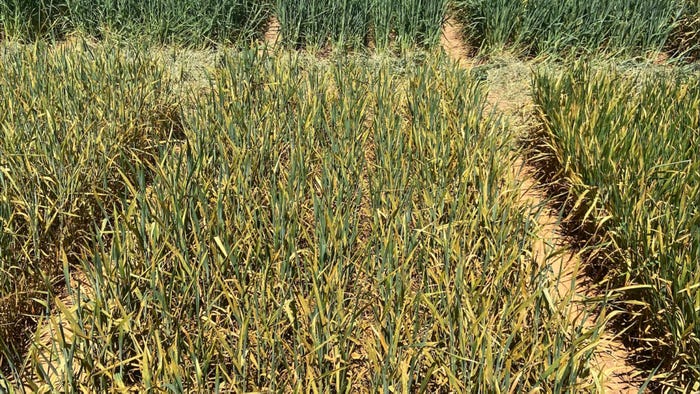
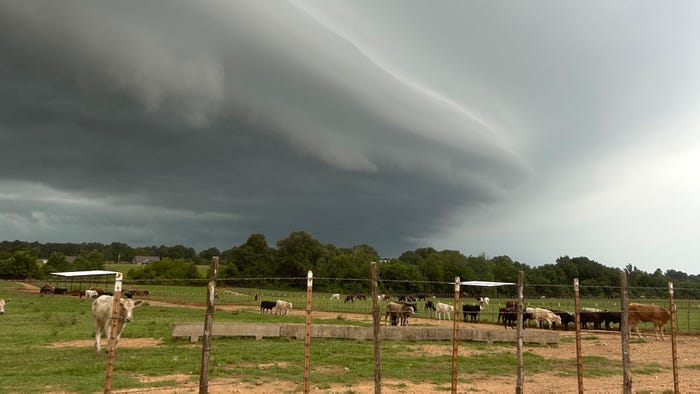
I spent a rainy October day recently in the company of a few Northeast Texas corn, wheat and cattle farmers, a most enjoyable way to spend any day and an especially good use of time when the soaking taking place outside makes field work impossible and puts farmers in a mood to chat.

No one was in any particular hurry to get rid of me.

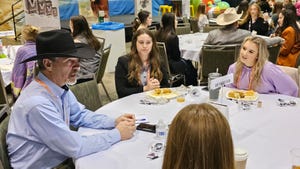
Eric Akins, Ken Griffin, his son Chris, and Jim Swart, a Texas Extension IPM agent who leads me to good interviews from time to time, sat around a table at a small café in Van Alstyne, munching on exceptional cheese burgers and homemade French fries and talking about the sorry state of farm economics.

These aren’t particularly gloomy folk. They don’t grouse much about how rural America is going to hell in a fertilizer sack and they take the bad weather with the good and figure things will even out as long as they do their jobs and take care of the things they can control.

But they are not happy with the current state of farm finance.

“Our production costs are completely out of line. It takes an average yield just to get our money back,” Akins said. “That’s not good business. And if we cut back on inputs, we can’t even make average. Cutting yield comes right off the top.”

Griffin and Akins, along with Bobby Sollis, with whom I caught up later in his farm shop, are doing all they can to control costs without sacrificing production. They’ve all three eliminated a trip or two across the fields and are looking closely at residual fertility in wheat that follows corn. But neither of the three believes in wholesale cuts in necessary production practices.

“We have to get a better price,” Griffin said.

They don’t believe trade agreements, at least agreements that resemble recent pacts, will solve the problems. Trading partners seems to get the better of those deals. And they look at rapidly escalating costs of energy, fertilizer and equipment and can’t help but wonder what the future holds.

They admitted to perhaps a grudging understanding of why the European Union holds fast to farm subsidies. “They’ve been hungry before,” Akins said. He said the devastation of two world wars made Europeans keenly aware of how vulnerable a country becomes when it can’t feed its people.

As I said, these are not doom and gloom, down in the mouth complainers. All three are good farmers and all three plan to follow much the same program for corn and wheat that they’ve followed, and been successful with, for years. But they are concerned.

As am I. I first heard the term “cost/price squeeze” shortly after I joined Farm Press Publications, back in 1978. It’s an expression that pops up way too of10 and illustrates how inadequate farm programs have become. Rarely do I meet a farmer who wants the government to pay all his bills, assure him a profit and guarantee his survival on the farm. What happens instead is that legislators continue to chip away at supports or give up way too much in trade negotiations, leaving farmers even more exposed to the caprices of weather and markets.

Farmers need to know that their government considers food and fiber production a crucial part of the country’s economy and that they are willing to take actions necessary to protect it.

That’s only reasonable.

e-mail: rsmith@primediabusiness.com

Get Copyright ClearanceWant to use this article? Click here for options!
© 2009 Penton Media, Inc.


Latest Jobs

resources

events icon events

product info icon tradeshows

tradeshow icon digests

research icon photos

Continuing Education

Accredited in Florida, Georgia, New Mexico, Oklahoma, Texas, South Carolina and Tennessee:


(New Course)
Weed Resistance Management in Cotton

This course covers a wide range of options to effectively control weeds in cotton and reduce the risk of weed resistance management. It is accredited for hours/units for licensed/accredited applicators in 7 U.S. Cotton Belt states (Florida, Georgia, New Mexico, Oklahoma, Texas, South Carolina an d Tennessee. CCA credit is pending).

(New Course)
New Mode of Action Chemistry for Vegetable Production

Integration of a new mode of action compound like Coragen into IPM and IRM programs to control Lepidoptera in leafy greens, fruiting vegetables, peppers and brassica or cole crops is always welcome. This online CE accredited course details how best to use this new mode of action insecticide in intensive vegetable production. It is accredited by the Certified Crop Adviser (CCA) program and by state agencies for licensed applicators in Texas, Georgia, Florida, New Jersey and Pennsylvania.

This course is accredited in Texas, Oklahoma, New Mexico, Virginia, West Virginia and Wyoming as well as for CCA credits:

(New Course)
Spray Drift Management

Keeping crop protection chemicals on the crop for which they are intended has been a cornerstone of farming not only to protect neighboring crops, but to not waste money allowing products to drift off the intended target. This accredited online continuing education course covers the critical elements of spray drift management.

Back to Top

Browse Print Issues

Additional Resources

subscribe to Farm Press Daily Delta Farm Press Southeastt Farm Press Western Farm Press