Industry report: technology adoption needed to reverse declining wheat trend

Jun 21, 2006 9:54 AM

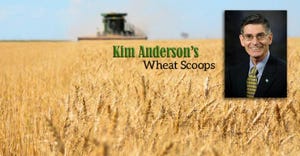
Adoption of biotechnology may hold one of the keys to reviving the declining U.S. wheat industry, according to a new report jointly authored by the National Association of Wheat Growers, the North American Millers’ Association, U.S. Wheat Associates and the Wheat Export Trade Education Committee. “Wheat in America is at a crossroads,” said Daren Coppock, National Association of Wheat Growers CEO. “Wheat’s share of American field crop receipts has fallen from 20 percent in the 1980s to about 11 percent now. This tide can be turned, but it will require wheat industry cooperation and action.”

The national wheat industry groups point to the lack of biotechnology as a primary reason why farmers are turning away from growing wheat. Each year, acreage of corn and soybeans and, to a lesser extent, cotton and canola, spread further and displace acres that used to be in wheat, the only non-biotech crop of the five. USDA data show North Dakota wheat plantings have declined 29 percent in the last 10 years, and Kansas – “the Wheat State” – produced 18 percent more corn than wheat last year.

“It is no coincidence that crops moving in are those using advanced traits from biotechnology. Yield increases in drought tolerant crops from biotechnology breakthroughs are sure to worsen this situation in the future,” the wheat industry coalition paper reports.

Biotechnology and other advanced genetic technologies have great promise to the wheat industry by reducing input costs and increasing quality and value, including nutritional value. The wheat groups say a concerted effort should be directed toward commercializing advanced traits in wheat at the earliest possible opportunity in order to improve its competitiveness and productivity. Simultaneously, efforts need to be made to ensure marketing systems are in place to assure customers who desire conventional wheat. This will include regulatory systems that account for adventitious presence of biotech grains in non-biotech shipments.

The wheat groups point out that their report is intended to “briefly outline the current situation and ways to change the paradigm.” Following further discussion with organizations within the wheat chain, it is expected to “become an action paper with clear goals and strategies for reversing the trend.” The Wheat Competitiveness Paper can be found online as a PDF on the NAWG web site, www.wheatworld.org, as well as the GfB web site, www.growersforbiotechnology.org.

Get Copyright ClearanceWant to use this article? Click here for options!
© 2009 Penton Media, Inc.


Latest Jobs

resources

events icon events

product info icon tradeshows

tradeshow icon digests

research icon photos

Continuing Education

Accredited in Florida, Georgia, New Mexico, Oklahoma, Texas, South Carolina and Tennessee:


(New Course)
Weed Resistance Management in Cotton

This course covers a wide range of options to effectively control weeds in cotton and reduce the risk of weed resistance management. It is accredited for hours/units for licensed/accredited applicators in 7 U.S. Cotton Belt states (Florida, Georgia, New Mexico, Oklahoma, Texas, South Carolina an d Tennessee. CCA credit is pending).

(New Course)
New Mode of Action Chemistry for Vegetable Production

Integration of a new mode of action compound like Coragen into IPM and IRM programs to control Lepidoptera in leafy greens, fruiting vegetables, peppers and brassica or cole crops is always welcome. This online CE accredited course details how best to use this new mode of action insecticide in intensive vegetable production. It is accredited by the Certified Crop Adviser (CCA) program and by state agencies for licensed applicators in Texas, Georgia, Florida, New Jersey and Pennsylvania.

This course is accredited in Texas, Oklahoma, New Mexico, Virginia, West Virginia and Wyoming as well as for CCA credits:

(New Course)
Spray Drift Management

Keeping crop protection chemicals on the crop for which they are intended has been a cornerstone of farming not only to protect neighboring crops, but to not waste money allowing products to drift off the intended target. This accredited online continuing education course covers the critical elements of spray drift management.

Back to Top

Browse Print Issues

Additional Resources

subscribe to Farm Press Daily Delta Farm Press Southeastt Farm Press Western Farm Press