Farmers fear impact of illegal immigrant crackdown

Aug 17, 2007 4:19 PM

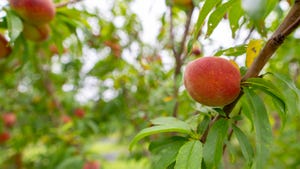
With fruit rotting in fields, unmilked cows suffering in barns and shuttered farmhouses, growers are painting a bleak picture of their industry under new federal immigration policies.

Following the Bush administration announcement that employers who knowingly keep undocumented workers will be held liable under a new enforcement push, many growers said their businesses would be hardest hit.

Particularly vulnerable would be fruit operations that are now hiring thousands of seasonal workers in preparation for the peak harvest months of July through September. The measure is to take effect in mid-September.

Andy Casado Jr. is a California farm labor contractor with nearly 800 workers who also grows and packs fruit himself.

"I'm guessing 80, 90 percent of the ag work force is illegal," he said. "Implementing this rule will be catastrophic."

While it's long been illegal to hire anyone not authorized to work in the United States, farmers take their chances that documents presented by the 1.6 million farm workers around the country are valid, said Howard Rosenberg, a farm labor at the University of California.

Think tanks that oppose illegal immigration praised the move, hoping it will turn off the job magnet has attracted new immigrants.

To farm workers, though, it's just another effort by the government to look good at the expense of the people who hold down the hardest and lowest paid jobs in the country.

"There's always more pressure on the immigrant community," said farm worker Gerardo Reyes of Immokalee, Fla. "We're making sure food gets to everyone's tables."

Farmers and farm workers agreed raising the stakes could hurt everyone.

"We're going to face firing employees whether the documents are wrong or right with no one to fill those positions," said J. Allen Carnes, president of Winter Garden Produce in Uvalde, Texas.

Carnes said he's already suffered worker shortages during the last few years because of tightened border security.

Steve Pringle, legislative director for the Texas Farm Bureau, said the Bush administration's move forces employers into an impossible position.

"Either you obey the law and you watch your crop rot in the fields or you attempt to try to get the crop out and run the risk of being hit by the federal government," he said.

Because tighter enforcement could hurt agriculture, Commerce Secretary Carlos Gutierrez has said the Labor Department will work to streamline the existing temporary worker program, which allows farmers to apply for foreign workers.

But farmers were more skeptical of what could be achieved under a program they consider bureaucratic and expensive.

Casado, the California contractor, recently took a seminar on the program. "I learned a lot, but one of the things I learned is that I can't do it myself," he said.

About 70 growers gathered this week in Fresno, deep in California's agricultural Central Valley, to discuss options, share doomsday scenarios, and shake their heads in frustration.

The state picks, packs and ships about half of the vegetables, nuts and fruits grown in the U.S. every year. Growers rely on 225,000 year-round employees, and twice that many in summer.

Keeping track of people who presented questionable papers weeks or months earlier in an industry where there's much worker mobility is beyond the scope of what farmers should be expected to do, they said.

"We're being charged with having to be the policing agent," said Russel Efird, who grows almonds, walnuts, grapes and fruit and heads the Fresno County Farm Bureau. "This will make it very hard for us to do our jobs."

Get Copyright ClearanceWant to use this article? Click here for options!
© 2009 Penton Media, Inc.


Latest Jobs

resources

events icon events

product info icon tradeshows

tradeshow icon digests

research icon photos

Continuing Education

Accredited in Florida, Georgia, New Mexico, Oklahoma, Texas, South Carolina and Tennessee:


(New Course)
Weed Resistance Management in Cotton

This course covers a wide range of options to effectively control weeds in cotton and reduce the risk of weed resistance management. It is accredited for hours/units for licensed/accredited applicators in 7 U.S. Cotton Belt states (Florida, Georgia, New Mexico, Oklahoma, Texas, South Carolina an d Tennessee. CCA credit is pending).

(New Course)
New Mode of Action Chemistry for Vegetable Production

Integration of a new mode of action compound like Coragen into IPM and IRM programs to control Lepidoptera in leafy greens, fruiting vegetables, peppers and brassica or cole crops is always welcome. This online CE accredited course details how best to use this new mode of action insecticide in intensive vegetable production. It is accredited by the Certified Crop Adviser (CCA) program and by state agencies for licensed applicators in Texas, Georgia, Florida, New Jersey and Pennsylvania.

This course is accredited in Texas, Oklahoma, New Mexico, Virginia, West Virginia and Wyoming as well as for CCA credits:

(New Course)
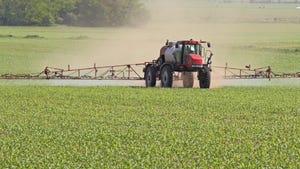
Spray Drift Management

Keeping crop protection chemicals on the crop for which they are intended has been a cornerstone of farming not only to protect neighboring crops, but to not waste money allowing products to drift off the intended target. This accredited online continuing education course covers the critical elements of spray drift management.

Back to Top

Browse Print Issues

Additional Resources

subscribe to Farm Press Daily Delta Farm Press Southeastt Farm Press Western Farm Press