Avoid farm safety hazards during harvest

Sep 11, 2006 2:29 PM, By Robert Thomas

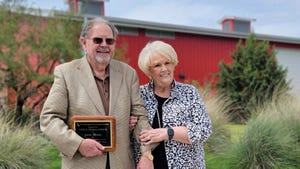
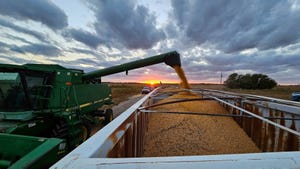
National Farm Safety and Health Week, Sept. 17-23, reminder: Older or disabled farmers should take extra safety care. The long hours of fall harvest put any farm family at greater risk of injury-particularly for aging farmers and ranchers or those with disabilities.

“Older farmers and ranchers must adjust for the effects of aging. The risk of having an accident increases with age,” said Karen Funkenbusch, coordinator of the AgrAbility program at the University of Missouri.

Compared to the general U.S. labor force, farm operators are considerably older. More than one-fourth of all farm operators are 65 years old or older.

“Unlike most workers, aging farmers tend to continue farming, which is a physically demanding job. They work long, hard hours in difficult conditions and use heavy equipment,” Funkenbusch said. “Safety should be their No. 1 concern.”

National Farm Safety and Health Week, Sept. 17-23, reminds operators to be safe during the harvest season and beyond, she said.

“With aging, farmers can face faster onset of fatigue, reduced vision, slower reaction time, hearing loss and arthritis,” Funkenbusch said. “This can lead to accidents causing death or injuries.”

Workers with physical disabilities, including those with arthritis, are at particular risk of sustaining injuries during harvest season. She estimated that at least 30,000 Missouri farmers, ranchers and others working in agriculture have an existing disability that limits their ability to perform work-related tasks.

Funkenbusch offers several tips for these farmers.

Have your eyes checked by a doctor regularly. Remember vision is most difficult at dawn and dusk. Avoid driving tractors during these times.

Get plenty of rest, especially during planting or harvesting seasons. Be sure to take frequent breaks to offset fatigue and stress. Periodically stretch arms and legs. This increases blood flow and helps you relax.

Use extreme caution when operating equipment. Be familiar with side effects of medication, including over-the-counter drugs.

Be sure a family member or fellow worker knows where you will be working. Recognize and accept your limitations. Check your fields for large rocks, tree stumps, holes and ditches. If you can’t remove an object, place warning flags around it.

Use two-way radios or cell phones as a direct link should an emergency occur.

The Missouri AgrAbility program helps farm families modify tasks and equipment for safer operation by aging family members. For more information, go to http://fsb.missouri.edu/agrability.

Get Copyright ClearanceWant to use this article? Click here for options!
© 2009 Penton Media, Inc.


Latest Jobs

resources

events icon events

product info icon tradeshows

tradeshow icon digests

research icon photos

Continuing Education

Accredited in Florida, Georgia, New Mexico, Oklahoma, Texas, South Carolina and Tennessee:


(New Course)
Weed Resistance Management in Cotton

This course covers a wide range of options to effectively control weeds in cotton and reduce the risk of weed resistance management. It is accredited for hours/units for licensed/accredited applicators in 7 U.S. Cotton Belt states (Florida, Georgia, New Mexico, Oklahoma, Texas, South Carolina an d Tennessee. CCA credit is pending).

(New Course)
New Mode of Action Chemistry for Vegetable Production

Integration of a new mode of action compound like Coragen into IPM and IRM programs to control Lepidoptera in leafy greens, fruiting vegetables, peppers and brassica or cole crops is always welcome. This online CE accredited course details how best to use this new mode of action insecticide in intensive vegetable production. It is accredited by the Certified Crop Adviser (CCA) program and by state agencies for licensed applicators in Texas, Georgia, Florida, New Jersey and Pennsylvania.

This course is accredited in Texas, Oklahoma, New Mexico, Virginia, West Virginia and Wyoming as well as for CCA credits:

(New Course)
Spray Drift Management

Keeping crop protection chemicals on the crop for which they are intended has been a cornerstone of farming not only to protect neighboring crops, but to not waste money allowing products to drift off the intended target. This accredited online continuing education course covers the critical elements of spray drift management.

Back to Top

Browse Print Issues

Additional Resources

subscribe to Farm Press Daily Delta Farm Press Southeastt Farm Press Western Farm Press