No reason to go back to conventional tillage system

Apr 13, 2009 10:33 AM, By Ron Smith
Farm Press Editorial Staff

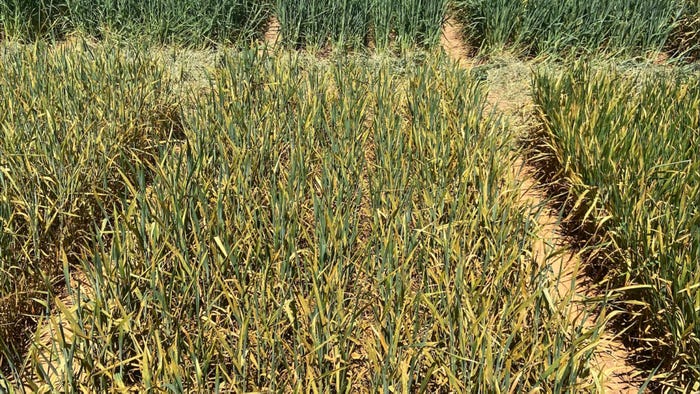
Jimmy Kinder, Walters, Okla., wheat farmer, tried a 25-acre field of no-till in 1994.

“In 1999, we were 100 percent no-till,” Kinder said at the No-till Oklahoma Conference in Oklahoma City.

Kinder farms some 5,000 acres of wheat with his father and brother and have typically raised “dual-purpose wheat” for grazing and grain. “But three years ago, wheat prices went up and we raised more for grain.”

He said they have not put a plow in the field since 1999. “If we plow just one time we set the clock back and lose 10 years of progress. I can’t see anything that would make me go back.”

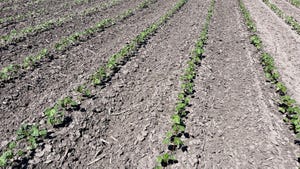
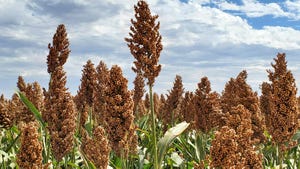
Kinder has tried other crops in no-till systems, “milo, corn, Sudan, cowpeas, soybeans and sunflowers, with varying degrees of success.”

Weeds can be a concern.

So can fertility, but he said farmers may apply too much nitrogen as often as they apply too little. He’s used a Green Seeker monitoring device, along with N-rich strips, for five years to determine in-season nitrogen needs. Readings from that combination allowed him to apply fertilizer to 21 percent of his acreage in 2004, 61 percent in 2005, 38 percent in 2006, 100 percent in 2007, and back down to 52 percent in 2008.

“New technology speaks volumes about savings potential." The time it takes to install and monitor the N-rich strips is easy to justify, he said. “It takes eight hours to put in N-rich strips and it takes eight hours to read them. That’s just 80 hours over five years.”

He figures he saved as much as $384,000 on fertilizer over that time. “I don’t know where the money went, but at least I didn’t have to borrow that much." On an hourly basis, the technology is worth about $4,800 an hour. “That’s how technology works for us, and a hand-held Green Seeker costs about $4,500.”

Kinder said Oklahoma wheat farmers have watched yields decrease over the past few years. “The five-year average yield is down since 2000 to about 30 bushels per acre. What we’re doing is not working. We’ve tilled the soil so much it’s not releasing nitrogen. We’re farming our soil worse than our grandfathers did.”

Kinder said if farms always got enough rain they might not need to no-till. Percentage of Oklahoma farmland in no-till production remains low, he said. “We need to do some unconventional thinking to solve problems. We assume that plants need a plow, but they grew for millions of years without plowing. What sense does it make to use a plow to prevent a plow pan? And why would native pasture not need plowing while cropland does?”

He said some folks believe their grandfathers didn’t change. “But they did. They adapted mechanization, hybrids and chemicals.”

“We need to solve our problems by thinking around them."

email: rsmith@farmpress.com

Get Copyright ClearanceWant to use this article? Click here for options!
© 2009 Penton Media, Inc.


Latest Jobs

resources

events icon events

product info icon tradeshows

tradeshow icon digests

research icon photos

Continuing Education

Accredited in Florida, Georgia, New Mexico, Oklahoma, Texas, South Carolina and Tennessee:


(New Course)
Weed Resistance Management in Cotton

This course covers a wide range of options to effectively control weeds in cotton and reduce the risk of weed resistance management. It is accredited for hours/units for licensed/accredited applicators in 7 U.S. Cotton Belt states (Florida, Georgia, New Mexico, Oklahoma, Texas, South Carolina an d Tennessee. CCA credit is pending).

(New Course)
New Mode of Action Chemistry for Vegetable Production

Integration of a new mode of action compound like Coragen into IPM and IRM programs to control Lepidoptera in leafy greens, fruiting vegetables, peppers and brassica or cole crops is always welcome. This online CE accredited course details how best to use this new mode of action insecticide in intensive vegetable production. It is accredited by the Certified Crop Adviser (CCA) program and by state agencies for licensed applicators in Texas, Georgia, Florida, New Jersey and Pennsylvania.

This course is accredited in Texas, Oklahoma, New Mexico, Virginia, West Virginia and Wyoming as well as for CCA credits:

(New Course)
Spray Drift Management

Keeping crop protection chemicals on the crop for which they are intended has been a cornerstone of farming not only to protect neighboring crops, but to not waste money allowing products to drift off the intended target. This accredited online continuing education course covers the critical elements of spray drift management.

Top 10 Articles of 2008

Back to Top

Browse Print Issues

Additional Resources

subscribe to Farm Press Daily Delta Farm Press Southeastt Farm Press Western Farm Press