NRCS watershed structures prevent greater flood damage

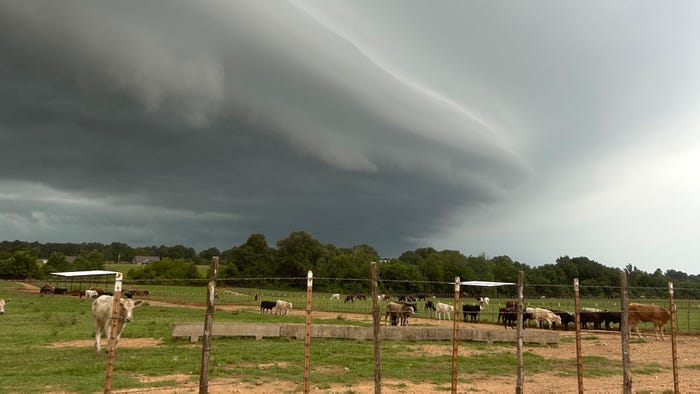
Temple, Texas – Storms that produced heavy rains on June 18, 2007, brought flooding and flood damage to north Texas. Damage in Cooke, Grayson and Collin counties, according to estimates by the USDA Natural Resources Conservation Service (NRCS), could have been $7 million worse if not for the floodwater retarding structures located in those counties.

“When you see water as high as we had in some areas, it’s hard to imagine that it could have been worse, but it really could have been,” said Steve Bednarz, NRCS watershed program manager in Temple. “Although not well known, floodwater retarding structures built under the watershed program are out there functioning as designed and minimizing the impacts of flooding.”

Local watershed sponsors, with the assistance of NRCS, have constructed nearly 300 floodwater retarding structures in watersheds in Cooke, Grayson, and Collin counties. These structures were constructed through the Watershed Protection and Flood Prevention Act, which authorized NRCS to provide assistance to local sponsors with planning and installation of projects to reduce flooding, as well as provide erosion and sedimentation control.

Damage reduction estimates by NRCS were based on rainfall amounts from 3 to 8 inches on June 18 during a six-hour period in three of these watersheds: Choctaw Creek, Little Elm and Laterals, and Elm Fork.

“These floodwater retarding structures have had a big impact in reducing flood damages, some $7 million in Choctaw Creek, Little Elm and Laterals, and Elm Fork watersheds alone,” Bednarz said.

After heavy rainfall events like Texas has recently experienced, floodwater retarding structures capture rushing floodwater behind the dam and hold it back allowing it to be more slowly released through a concrete pipe spillway. “All of the flood retarding structures are doing their jobs and continuing to release water at a safe velocity,” said Gary Connor, NRCS district conservationist at Gainesville. “If not for these structures, even more homes and businesses could have been damaged from the storms."

With about 2,000 floodwater retarding structures throughout Texas, NRCS estimates that the state derives more than $101 million each year in benefits, which includes soil erosion savings, water conservation, road and bridge damage reduction, wetland/upland wildlife habitat creation, recreation, and personal property protection.

More information about the watershed program in Texas can be found at the following Web Site: http://www.tx.nrcs.usda.gov/programs/watersheds/.

Discuss this article 1

It sure would be nice if every dam were equipped with an early-warning system to alert downstream communities that water is flowing through the spillway. It could save lives by giving people time to evacuate a threatened area. Perhaps a passive, battery-free hydro-powered generator that sits idle 24/7 until flow passing through it powers up a transmitter tuned to broadcast on an emergency frequency.

Here’s something that might do the job:

http://www.facebook.com/pages/WEDGE-Inc/190954903399?ref=ts

By Anonymous (not verified)  on Jun 8, 2011
Post new comment
Sign In or register to use your Southwest Farm Press ID
(optional)

Continuing Education Courses
New Course
The course details six of the primary diseases affecting citrus: Huanglongbing (Citrus...
Potassium nitrate has a positive effect in controlling plant pests and diseases when applied...
This online CE course details sound mechanical irrigation design and management practices to...
Farmer-to-Farmer Used Equipment