AgriLife Research contributing new quality to cotton

What is in this article?:

  • Texas cotton getting a genetic ‘tune-up.’
  • Breeder’s role is to infuse new genes and gene combinations into the genetics and breeding research arena.
  • Ongoing climate changes will alter the scope and scale of the challenges found in current production areas.


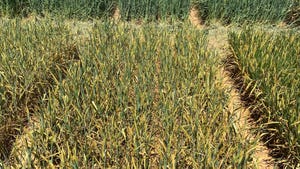
Dr. David Stelly, Texas AgriLife Research cotton scientist,uses a mixture of three greenhouses year-round and two summer fields, one consisting of transplanted seedlings and another from direct-seeding into the soil.

(Texas AgriLife Research photo courtesy of David Stelly)

Can you imagine trying to build a competitive race car with old parts? Chances are, the entry would not fare well at the Indy 500. Very much the same thing might be said about today’s crops, according to a Texas A&M AgriLife Research scientist.

“Contemporary crops such as Texas cotton are like finely tuned racing machines — they need high quality parts to perform optimally,” said Dr. David Stelly, AgriLife Research cotton geneticist in College Station. “And they constantly need new ones to replace ones that are no longer functional, as well as those that are still effective but no longer at the cutting edge of competition.”

Stelly said his role in the AgriLife Research cotton breeding program is to infuse new genes and gene combinations into the genetics and breeding research arena, “so that we can utilize natural genetic resources to help meet the many challenges breeding programs face.”

Transferring genes into a cultivated crop from a wild species “is like swimming upstream, one is fighting all sorts of biological and genetic barriers,” he said. For years, he and his long-time research assistant, Dwaine Raska, have been transferring the alien genes by a special breeding process called “chromosome substitution.” 

“Using chromosome substitution, we can target one pair of cultivated cotton chromosomes at a time, and replace it with the corresponding pair of chromosomes from a wild species chosen as the donor. On average, each substitution replaces about 2,000 cotton genes with donor genes,” Stelly said.

Having already developed chromosome substitution lines for many chromosomes from three donor species, Stelly is working in collaboration with a former graduate student, Dr. Sukumar Saha, now with the U.S. Department of Agriculture-Agricultural Research Service unit at Mississippi State University, and his associates, to document the effects on cotton plant and fiber improvement.

Discuss this Article 0

Post new comment
Sign In or register to use your Southwest Farm Press ID

(optional)

Continuing Education Courses
This CE course is accredited for hours in Texas, Oklahoma and New Mexico. The content focuses...
New Course
The 2,000 member Weed Science Society of America’s (WSSA) Herbicide Resistance Action...
New Course
The course details six of the primary diseases affecting citrus: Huanglongbing (Citrus...

Newsletter Signup