Australian farmers trek 18,000 miles in cotton picker quest

  • Nine thousand miles is a long haul to buy a cotton picker. Tack on another 9,000 miles to get home and you have the makings of an epic journey or a geographical accident. Throw in a couple of Australians kicking up Delta dirt in Mississippi, and the story takes on a surreal quality — a cotton odyssey.
  • They don’t trust mineral companies, have no patience with the environmental ‘greens’, and believe the government is a broken machine.
  • Over the last 20 years, their cotton bales-per-acre average has been in the 3.5-3.75 range.

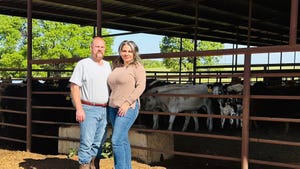
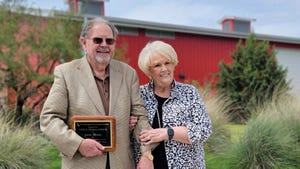
Ian Hayllor, Dalby, Queensland, and son Jimmy, right, traveled a total of 18,000 miles to buy a cotton picker in Tunica, Miss., and transport it back to Australia.

Water wars, cotton yields

“The water issue is a big debate at present. We just had two of the wettest years on record, but they’re talking about taking back 60 percent of allocations. It’s massive, the biggest irrigation area in Australia and the green environmentalists want to take away 60 percent of our water,” Ian says.

He believes the water constraints have only just begun.

“I think you’re going to face cutback after cutback for the next fifty years. The greens, they’d like to shut down agriculture if they could. I’m not sure what we’d eat, but they don’t quite understand the real world. They buy their food in shops, so they don’t really need agriculture.”

For all his frustration with regulations and restrictions, Ian’s sheer enthusiasm for agriculture is undaunted. Born in England, (about as geographically removed from a cotton field as one could get) Ian took a vacation to Australia in 1980 — and never left, becoming a poster-child for self-sufficiency: “I went to Australia and loved the blue skies and open spaces. I was 23 years old. While in Australia, I was lucky enough to meet an English farmer who was looking to buy an Australian farm. We knew each other for a week — and bought a farm together. I stayed and he went back to England. I don’t have a cotton background — no cotton grown in England. I started off and built up the business over the last 30 years.”

When Ian talks cotton, his sentences are punctuated with expectation and he says 2012 could be a tremendous year for Australia. Ian grows Sicot 71 BRF and it’s been an incredibly good yielder. He estimates that his cotton fields have seen a 2.5 percent yield increase annually for the past 30 years — with half the increase attributed to improved variety and the other half from improved management. Over the last 20 years, Ian’s bales-per-acre average has been in the 3.5-3.75 range. “When I first started growing cotton, 3 bales was a very good crop. Now if you don’t hit 5 bales, you cry.”

Overall, Australian cotton yield numbers are outstanding. “This year they’re saying the very best crops brought 7 bales to the acre. That is hard to believe. You could walk on it and not fall through. But we’ve seen 5.5-bale cotton on our farm, and there are farms that average 6-bale cotton. We were jealous, because with the flood we only averaged 3 bales, our worst average in 20 years.”

Admittedly, Ian’s farm role is a balancing act — with his time divided between regulatory issues and government battles, while Jimmy is hands-on at the farm. With wife Deb, Jimmy and another son Dan, Ian farms approximately 9,000 acres. This coming season, he hopes to plant 3,500 acres of cotton (half of it irrigated); 2,500 acres of wheat; and the rest of the acreage in corn and sorghum. Beyond government red tape, water problems, and environmental legislation, day-to-day farm operation is what Ian thrives on.

Discuss this Article 0

Post new comment
Sign In or register to use your Southwest Farm Press ID
(optional)

Continuing Education Courses
This CE course is accredited for hours in Texas, Oklahoma and New Mexico. The content focuses...
New Course
The 2,000 member Weed Science Society of America’s (WSSA) Herbicide Resistance Action...
New Course
The course details six of the primary diseases affecting citrus: Huanglongbing (Citrus...

Newsletter Signup