Cotton, cantaloupe intercropping shows promise

What is in this article?:

  • The primary aim of the research was to determine the economic feasibility of cotton and cantaloupe intercropping.
  • The secondary objective was to try and determine how to actually do it.
  • Growers had heard about the possibility of planting cotton into cantaloupes as a way of maximizing farm income.

Cantaloupes and cotton are two crops that normally aren’t mentioned in the same breath, but that wasn’t the case during a presentation at the recent Beltwide Cotton Conferences in Atlanta, where a southwest Georgia county agent discussed the possibilities of this unique inter-cropping arrangement.

“We have some very innovative farmers in Tift County, and one of the things we continue to learn is that they are always looking to maximize profitability and economics on their farms,” says Extension County Coordinator Brian Tankersley.

Some growers approached him last winter, says Tankersley, and said they had heard about the possibility of planting cotton into cantaloupes as a way of maximizing farm income.

“I told him he wouldn’t get the cantaloupes off until about the middle of July. How would he make a cotton crop? His idea was to plant cotton into cantaloupes, but I wasn’t sure how he would keep people from walking on them. This was a producer-driven research study where we had the opportunity to participate with the grower because he was going to try it, and he was willing to put the money behind it,” he says.

The primary aim of the research was to determine the economic feasibility of cotton and cantaloupe intercropping, says Tankersley.

“Tift County is not large geographically, with about 60,000 acres of farmland and 60 percent of it irrigated. But we also produce about $150 million in farm-gate value, and about $100 million of that is in produce. In a typical year, we produce anywhere from 1,600 to 2,000 acres of cantaloupes, and we also produce from 17,000 to 20,000 acres of cotton. Last year, we produced more than 25,000 acres. But these two commodities — cotton and cantaloupes — are two or our high farm-gate-value crops. They make up about $25 million of our farm-gate value, so it’s very important if we can maximize both of them,” he says.

When growing cantaloupes, three to five separate plantings are made in March over about six weeks to stretch out the spring harvest.

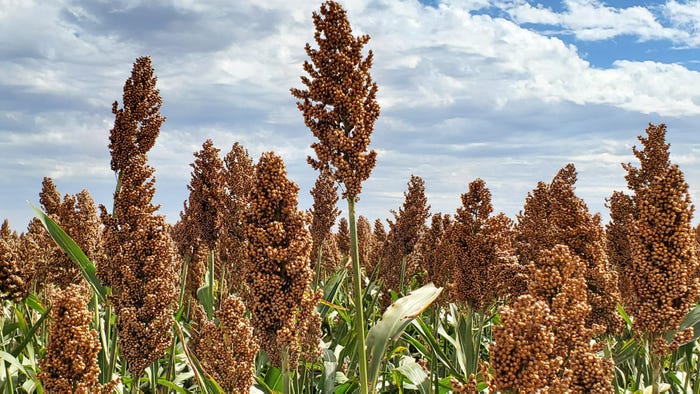
“We normally plant transplants on slightly raised 24-inch plastic beds and we use overhead irrigation like center pivots to water,” says Tankersley. “We normally harvest cantaloupes starting around Memorial Day and going through July 15, depending on the season. We usually pull plastic and till the soil, and then we might plant a program crop like grain sorghum or a late corn crop after July 15 with the hopes of getting an additional income using some of the residual fertilizer and other inputs.”

The profitability of planting grain sorghum and other grain crops after cantaloupes has been marginal, he says. “We estimate normally that we get about 75 bushels of grain sorghum per acre, but when you think about the price, it’s not as profitable.”

Discuss this article 0

Post new comment
Sign In or register to use your Southwest Farm Press ID

(optional)
Connect With Us
Continuing Education Courses
New Course
The course details six of the primary diseases affecting citrus: Huanglongbing (Citrus...
Potassium nitrate has a positive effect in controlling plant pests and diseases when applied...
This online CE course details sound mechanical irrigation design and management practices to...
n/a