What is in this article?:
- Ginning industry continues to face regulatory and budget hurdles
- Air quality issues
- Employment rules and regs
“Given recent and upcoming budget cuts, the ginning industry can’t afford to sit on the sidelines," says Lee Tiller, president of the National Cotton Ginners Association. "There is little doubt that in the future the three USDA ginning laboratories and important USDA staff positions may be in jeopardy. With every federal agency’s budget cut, it will be even more imperative that we support these ginning labs and that all segments of our industry work to insure that these facilities are adequately funded so they can continue their valuable research and training programs.”
More About:

THE GOAL of the U.S. cotton ginning industry is to "produce the best quality fiber in the world," says Lee Tiller, president of the National Cotton Ginners Association. He spoke at the annual meeting of the Southern Cotton Ginners Association at Memphis.
Employment rules and regs
“Many employment issues continue to cause problems for our ginners, and we continue to provide assistance and materials to assist our members in adhering to the many rules and regulations. With increased enforcement and the possibility of fines, it is important that ginners abide by all labor laws, OSHA rules, and other regulations.”
Bale moisture restoration at the gin and the ability measure bale moisture correctly also continue as industry concerns, Tiller says.
“Last year, NCGA requested that Rick Byler at the USDA Ginning Laboratory at Stoneville compare and evaluate the accuracy of various commercially available moisture measuring devices. This was done after merchants rejected bales in the Southeast that were based on moisture measurements done with handheld probes. The merchants cited both National Cotton Council policy and Memphis Cotton Exchange rules.
“The rejections prompted calls for a review of NCC policy and in response, NCGA established a Bale Moisture Policy Review Committee. Since so many questions remain unanswered, NCGA has not sought changes to the NCC policy regarding moisture restoration at the gin, and the committee decided to have Dr. Byler continue his evaluation of measuring devices.”
It is “vitally important” that gin employees be well-trained, Tiller says, “and we’re confident that our ginning schools at the USDA labs are helping fill the need for competent workers.
“During the past several years, NCGA has been modifying the schools’ continuing education component by including topics important not only to ginners, but to gin managers and superintendents. We will continue to enhance programs at the three schools so they will remain relevant and meet the needs of our industry.”
This year’s school will be March 26-28 at the South Plains Ginning Laboratory at Lubbock, Texas; May 8-10 at the Southwest Ginning Research Laboratory at Mesilla Park, N.M.; and June 12-14 at the at the Stoneville, Miss., facility. Details are available on the NCGA website: http://www.cotton.org/ncga/
The Cotton Ginners Certification Program has continued to grow since its launch in 1992, Tiller says, and more than 300 ginners are now actively participating in the program.
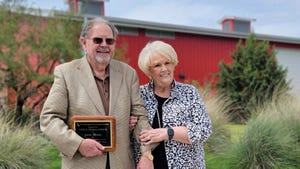
One Mid-South ginner, Travis Childs, Jr., completed the stringent course requirements in 2011 and has been awarded the Certified Ginner designation.
“Many issues continue to pose challenges for ginners,” Tiller says, “and our industry will need to remain diligent and prepared to protect our interests.”