Total removal is goal for resistant weed population

What is in this article?:

  • Herbicide resistant weeds are prolific seed producers.
  • Abusing the chemistry may create significant problems within three years.
  • Rotating mode of action is a critical management tool.


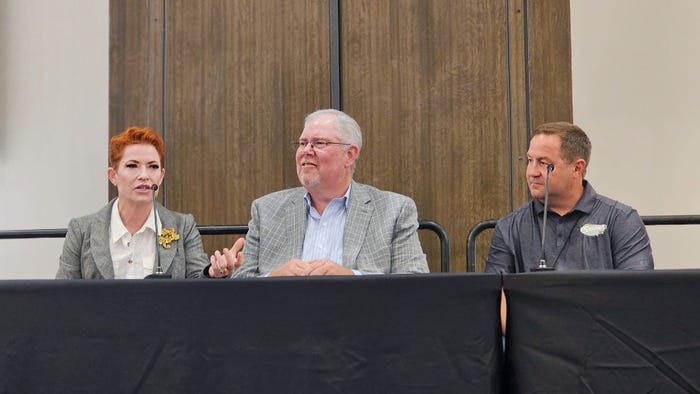
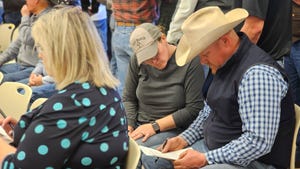
Tom Eubank, Mississippi State University; Shannon Morsello, Syngenta; and Jason Boyd, Mississippi State University, pose following a panel discussion on herbicide resistant weed control at the annual Ag Technology conference in Commerce, Texas.,

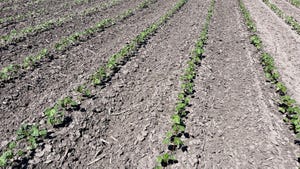
Grant no mercy to suspected herbicide-resistant weeds. If it’s alive after harvest or remains green in-season following prescribed herbicide applications, do whatever is necessary to remove the offensive pest from the field.

It’s a numbers game, says Jason Bond, Mississippi State University weed scientist out of the Delta Research and Extension Center in Stoneville. If an average of 1.5 female Palmer amaranth plants escape control in a field (in a non-competitive environment), they can produce up to 2 million seed in the first year. In year two, if a producer accomplishes 99.9 percent weed control, as many as 1,000 plants may survive. If just 400 of those are female, they may produce as many as 160 million seed.

“We can’t count the number of seed that could survive in year three,” he said.

Bond, who has had ample experience with glyphosate-resistant weeds, especially Palmer amaranth or pigweed, in Mississippi cotton and soybeans fields, told a group of Texas farmers that if they let the weeds get a head start they’ll soon see more weed in their fields than crop.

“Herbicides do not create resistant weeds,” Bond said at the annual Ag Technology Conference in Commerce, Texas. “We create resistant weeds through selection pressure.”

Using the same herbicide or the same mode of action over and over allows weeds that are resistant to that product to survive while the weeds susceptible to the material die. In several years, a field is infested with weeds that can no longer be controlled by a particular herbicide.

“The resistance is already present in the weed population,” Bond said. “Abusing the chemistry may create significant problems within three years.”

Discuss this Article 2

Nico Morris (not verified)
on Jan 18, 2013

OK so I'm NOT a farmer(this will become obvious!) and I do not understand "weeds" as enemies..and on a very SMALL scale I have seen "weeds" easily managed in a non tilling process using huge amounts of mulch(dead plant material) shredded and applied to crops more than four inches thick. when undesired neighbors crop up through the mulch is is very easy to destroy them with a shuffle of the feet or a light raking. possibly this approach(which increases worm,microbe and fungal activity,natural soil building) would be to expensive in the short run,but it would eliminate the need for so much fertilizers and create soil structure that is less likely to wash and blow away. The plants themselves could be shredded on site and kept in place and rotated with legumes to increase Ni etc... farm of the future key key line plowing etc.. just sayin' can the chemicals

rsmith
on Jan 25, 2013

Many farmers already use no-till techniques and employ crop residue--mulch--to increase organic matter, to limit wind and water erosion, and to help control weeds. On a large-scale, however, shuffling one's feet to eliminate the weeds that pop through the mulch is at best impractical and ineffective. Judicious use of labeled--and tested--herbicides provide an effective means of controlling weeds economically. They key word is judicious. Conscientious farmers understand that stewardship of resources is not only in the best interest of their neighbors, their region and their environment, but also in their own best interest in keeping the soil productive for future generations. They want to leave the land in better shape than they found it when they pass it along to the next generation.

Post new comment
Sign In or register to use your Southwest Farm Press ID

(optional)

Continuing Education Courses
This CE course is accredited for hours in Texas, Oklahoma and New Mexico. The content focuses...
New Course
The 2,000 member Weed Science Society of America’s (WSSA) Herbicide Resistance Action...
New Course
The course details six of the primary diseases affecting citrus: Huanglongbing (Citrus...

Newsletter Signup