Farms needing crucial migrant labor face daunting regulations

For years, producers and state agriculture officials have warned that federal laws governing farm workers — often in a three-way tug-of-war between farms’ need for migrant workers in the field, security concerns in the wake of 9/11, and U.S. communities and states claiming heavy social/financial burdens imposed on them by illegal aliens numbering over 11 million — are heavy-handed and laden with unexpected consequences.

Provide extended visas

If nothing else, at least provide extended visas, says Strain. “Most of the migrant workers, 90 percent, come back year-after-year-after-year. So, instead of a yearly approval we propose a five-year approval. Make it like a ‘worker passport’ or whatever.

“That would save the average farmer — if he employs 15 or 20 migrant workers — $50,000 to $75,000 over a five year period. That’s just the savings from expedited worker fees. A five-year approval process would cut down tremendously on red tape.

“Plus, the farmer would have a bit more time to get the approvals in order. It is very difficult to get the normal, legal, guest workers to their jobs. These workers are critical for a number of our industries: seafood, sugar, nurseries, forestry, vegetables, cotton gins, everywhere.”

 “It’s almost as if the guest worker program is very unfriendly. Each agency says ‘well, it isn’t us making problems it’s another agency.’ Well, someone is responsible and let’s work it out.”

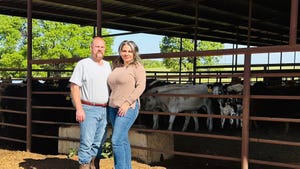
The regulatory tangle for migrant workers also affects the agriculture sector in ways many would never consider. Tracy Zeorian, president of the U.S. Custom Harvesters Association, has seen that up close. Zeorian, who operates a custom harvesting business with her husband, says procuring a hazmat endorsement which allows a driver to haul materials deemed “hazardous,” including diesel — for migrant workers is impossible.

“H-2A employees aren’t eligible to even receive the hazmat endorsement,” says Zeorian, an advocate for changing fuel-hauling regulations. “So, if you have a crew of eight or 10 foreign employees, the American business owner would be the only one who could have the hazmat endorsement. He’d be the one who’d have to haul the fuel to the field every morning and would be the one hauling the tank down the road when driving from job to job.”

What about farm workers coming to the United States through aJ-1 or student, visa?

“Generally, that works well only for relatively small growers — like some organic growers,” said Gasperini. “If you need someone to pick crops for 10 hours, that’s not likely to appeal to someone on an educational visa. They’ll sign up for a small organic farm with lots of mixed crops with (the aim of taking the gained knowledge) back home. That’s worked out well for some of those U.S. producers — but not for bigger operations. 

“But producers are being forced to consider all kinds of farm labor alternatives, including convicts. And using convicts can be problematic because some large grocery chains have prohibitions against using prison labor.”

Strain says the pressures facing businesses that rely on migrant labor mustn’t be ignored. “You know, everyone talks about ‘legal’ and ‘illegal’ workers. Well, if you make it so hard to get legal migrant worker, guess what the consequences are? Everyone wants to hire legal workers but what’s the choice (if they’re shut out)?”

dbennett@farmpress.com

Discuss this Article 0

Post new comment
Sign In or register to use your Southwest Farm Press ID
(optional)

Continuing Education Courses
This CE course is accredited for hours in Texas, Oklahoma and New Mexico. The content focuses...
New Course
The 2,000 member Weed Science Society of America’s (WSSA) Herbicide Resistance Action...
New Course
The course details six of the primary diseases affecting citrus: Huanglongbing (Citrus...

Newsletter Signup