Expanding U.S. beef trade is vital to the industry’s future

Nov 26, 2008 9:12 AM

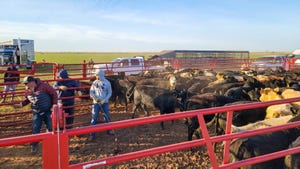
At the Texas Cattle Feeders Association (TCFA) Annual Convention in Grapevine, Andy Groseta, the president of the National Cattlemen’s Beef Association (NCBA), said his “number one goal is to continue to grow and expand our beef export market.”

While U.S. beef exports are closing in on a return to pre-December 2003 levels, Groseta said, “We need to continue to fight for fair and reliable trade because, as we all know, exports are one of the most important ways to add value to our cattle.”

In quantifying the significance of beef trade, Groseta said the added value exports create amounts to approximately $180 per head for each of the 27 million steers and heifers marketed annually in the U.S. That added value largely relates to the fact that foreign countries often desire beef cuts and other items that draw much less interest from American consumers. As examples, Groseta cited sales of short ribs to South Korea, tongues and short plate to Japan, outside rounds to Mexico, and liver to countries like Egypt and Russia.

Unfortunately, efforts to increase beef trade have been hampered in recent years by various barriers imposed by foreign governments. Groseta noted that a recent report by the International Trade Commission estimated that trade restrictions related to BSE cost the U.S. cattle business $11 billion from 2004 to 2007. “Overcoming these unfair trade restrictions has been a focus of NCBA efforts for years, and we are seeing some success,” Groseta said.

A critical trading partner that has agreed to re-open to U.S. beef is South Korea, which was an $800 million market in 2003. “We are confident that we can build this market into a $1 billion market for the U.S. cattle industry,” said Groseta, adding that the 6 to 9 million pounds currently being shipped to South Korea every week rivals the 10 million pound weekly average that U.S. beef enjoyed in 2003.

Much of the news on trade is good, as Groseta pointed to the fact that beef exports are on pace to total $3.5 billion this year, which would be second only to the 2003 plateau of $3.86 billion. But issues remain, and Groseta expressed particular concern that the new country-of-origin labeling (COOL) law will have detrimental effects on cattle and beef trade with Canada and Mexico.

“The concern is that COOL might result in de facto discrimination against imported beef,” Groseta said. He added that NCBA is monitoring the progress of COOL’s implementation and “if we see any negative impacts on the domestic or international demand for beef, we are committed to work with Congress to change the law.” Groseta added that if changes to COOL are sought, NCBA will be calling on TCFA and other organizations to help make the case with lawmakers.

Get Copyright ClearanceWant to use this article? Click here for options!
© 2010 Penton Media, Inc.


Latest Jobs

resources

events icon events

product info icon tradeshows

tradeshow icon digests

research icon photos

Continuing Education

Accredited in Florida, Georgia, New Mexico, Oklahoma, Texas, South Carolina and Tennessee:


(New Course)
Weed Resistance Management in Cotton


This course covers a wide range of options to effectively control weeds in cotton and reduce the risk of weed resistance management. It is accredited for hours/units for licensed/accredited applicators in 7 U.S. Cotton Belt states (Florida, Georgia, New Mexico, Oklahoma, Texas, South Carolina an d Tennessee. CCA credit is pending).

(New Course)
New Mode of Action Chemistry for Vegetable Production

Integration of a new mode of action compound like Coragen into IPM and IRM programs to control Lepidoptera in leafy greens, fruiting vegetables, peppers and brassica or cole crops is always welcome. This online CE accredited course details how best to use this new mode of action insecticide in intensive vegetable production. It is accredited by the Certified Crop Adviser (CCA) program and by state agencies for licensed applicators in Texas, Georgia, Florida, New Jersey and Pennsylvania.

This course is accredited in Texas, Oklahoma, New Mexico, Virginia, West Virginia and Wyoming as well as for CCA credits:

(New Course)
Spray Drift Management

Keeping crop protection chemicals on the crop for which they are intended has been a cornerstone of farming not only to protect neighboring crops, but to not waste money allowing products to drift off the intended target. This accredited online continuing education course covers the critical elements of spray drift management.

New Course
The ABCs of MRLs

American agriculture exports 20 to 30 percent of its production annually. For specific commodities, the percentage is much higher. When recommending and applying pest management products for crops, license Pest Control Advisers (PCAs)  and applicators and farmers must be aware of which products applied are in compliance with Maximum Residue Limits (MRLs) established by foreign customers. This CE course details the MRL issue and why compliance is critical to marketing into world trade.

Back to Top

Browse Print Issues

Additional Resources

subscribe to Farm Press Daily Delta Farm Press Southeastt Farm Press Western Farm Press