Share

Don't blame cows for climate change

Mar 4, 2010 10:39 AM, UC Davis

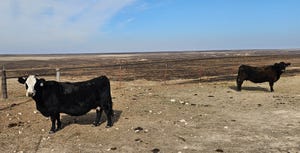
Despite oft-repeated claims by sources ranging from the United Nations to music star Paul McCartney, it is simply not true that consuming less meat and dairy products will help stop climate change, says a University of California authority on farming and greenhouse gases.

UC Davis Associate Professor and Air Quality Specialist Frank Mitloehner says that McCartney and the chair of the U.N.'s Intergovernmental Panel on Climate Change ignored science last week when they launched a European campaign called "Less Meat = Less Heat." The launch came on the eve of a major international climate summit, which runs today through Dec. 18 in Copenhagen.

McCartney and others, such as the promoters of "meatless Mondays," seem to be well-intentioned but not well-schooled in the complex relationships among human activities, animal digestion, food production and atmospheric chemistry, says Mitloehner.

"Smarter animal farming, not less farming, will equal less heat," Mitloehner said. "Producing less meat and milk will only mean more hunger in poor countries."

Mitloehner traces much of the public confusion over meat and milk's role in climate change to two sentences in a 2006 United Nations report, titled "Livestock's Long Shadow." Printed only in the report's executive summary and nowhere in the body of the report, the sentences read: "The livestock sector is a major player, responsible for 18 percent of greenhouse gas emissions measured in CO2e (carbon dioxide equivalents). This is a higher share than transport."

These statements are not accurate, yet their wide distribution through news media have put us on the wrong path toward solutions, Mitloehner says.

"We certainly can reduce our greenhouse-gas production, but not by consuming less meat and milk.

"Rather, in developed countries, we should focus on cutting our use of oil and coal for electricity, heating and vehicle fuels."

Mitloehner said leading authorities agree that, in the U.S., raising cattle and pigs for food accounts for about 3 percent of all greenhouse gas emissions, while transportation creates an estimated 26 percent.

"In developing countries, we should adopt more efficient, Western-style farming practices, to make more food with less mgreenhouse gas production," Mitloehner continued. In this he agrees with the conclusion of "Livestock's Long Shadow," which calls for "replacing current suboptimal production with advanced production methods — at every step from feed production, through livestock production and processing, to distribution and marketing."

"The developed world's efforts should focus not on reducing meat and milk consumption," said Mitloehner, "but rather on increasing efficient meat production in developing countries, where growing populations need more nutritious food."

Mitloehner particularly objects to the U.N.'s statement that livestock account for more greenhouse gases than transportation, when there is no generally accepted global breakdown of gas production by industrial sector.

He notes that "Livestock's Long Shadow" produced its numbers for the livestock sector by adding up emissions from farm to table, including the gases produced by growing animal feed; animals' digestive emissions; and processing meat and milk into foods. But its transportation analysis did not similarly add up emissions from well to wheel; instead, it considered only emissions from fossil fuels burned while driving.

"This lopsided 'analysis' is a classical apples-and-oranges analogy that truly confused the issue," Mitloehner said.

Most of Mitloehner's analysis is presented in a recent study titled "Clearing the Air: Livestock's Contributions to Climate Change," published in October in the peer-reviewed journal Advances in Agronomy. Co-authors of the paper are UC Davis researchers Maurice Piteskey and Kimberly Stackhouse.

"Clearing the Air" is a synthesis of research by the UC Davis authors and many other institutions, including the U.N. Food and Agriculture Organization, U.S. Environmental Protection Agency, U.S. Department of Agriculture, California Environmental Protection Agency and the California Air Resources Board. Writing the synthesis was supported by a $26,000 research grant from the Beef Checkoff Program, which funds research and other activities, including promotion and consumer education, through fees on beef producers in the U.S.

Since 2002, Mitloehner has received $5 million in research funding, with 5 percent of the total from agricultural commodities groups, such as beef producers.

Get Copyright ClearanceWant to use this article? Click here for options!
© 2010 Penton Media, Inc.


Latest Jobs

resources

events icon events

product info icon tradeshows

tradeshow icon digests

research icon photos

Continuing Education

Accredited for Certified Crop Adviser (CCA) units and hours/credit in Texas, New Mexico, Oklahoma, Tennessee, South Carolina, Virginia, Florida, Georgia, Maine and Delaware:


Weed Resistance Management in Cotton


This course covers a wide range of options to effectively control weeds in cotton and reduce the risk of weed resistance management. It is accredited for hours/units for licensed/accredited applicators in 7 U.S. Cotton Belt states (Florida, Georgia, New Mexico, Oklahoma, Texas, South Carolina an d Tennessee. CCA credit is pending).

Accredited for continuing education/recertification hours/units for pest control advisers/licensed applicators in California, Arizona, Georgia, Texas, Florida, Virginia, Pennsylvania, New Jersey, Delaware, Oregon, Maine, Washington and for Certified Crop Advisers:


New Mode of Action Chemistry for Vegetable Production

Integration of a new mode of action compound like Coragen into IPM and IRM programs to control Lepidoptera in leafy greens, fruiting vegetables, peppers and brassica or cole crops is always welcome. This online CE accredited course details how best to use this new mode of action insecticide in intensive vegetable production. It is accredited by the Certified Crop Adviser (CCA) program and by state agencies for licensed applicators in Texas, Georgia, Florida, New Jersey and Pennsylvania.

This course is accredited in Texas, Oklahoma, New Mexico, Virginia, West Virginia and Wyoming as well as for CCA credits:


Spray Drift Management

Keeping crop protection chemicals on the crop for which they are intended has been a cornerstone of farming not only to protect neighboring crops, but to not waste money allowing products to drift off the intended target. This accredited online continuing education course covers the critical elements of spray drift management.

This course is accredited for CE hours/units in California, Arizona, Florida, Georgia, Texas, Oklahoma, New Jersey, Delaware, Maryland and for Certified Crop Advisers.:


The ABCs of MRLs

American agriculture exports 20 to 30 percent of its production annually. For specific commodities, the percentage is much higher. When recommending and applying pest management products for crops, license Pest Control Advisers (PCAs) and applicators and farmers must be aware of which products applied are in compliance with Maximum Residue Limits (MRLs) established by foreign customers. This CE course details the MRL issue and why compliance is critical to marketing into world trade.

Back to Top

Browse Print Issues

Additional Resources

subscribe to Farm Press Daily Delta Farm Press Southeastt Farm Press Western Farm Press