New law clears the way for horse slaughter operations, but not in Texas

  • Slaughter of horses in the U.S. has been an emotional issue.
  • Law goes a long way in promoting humane treatment and disposal of equine that are infirmed or otherwise beyond their usefulness.
  • Current drought conditions have put the humane treatment of horses at risk.

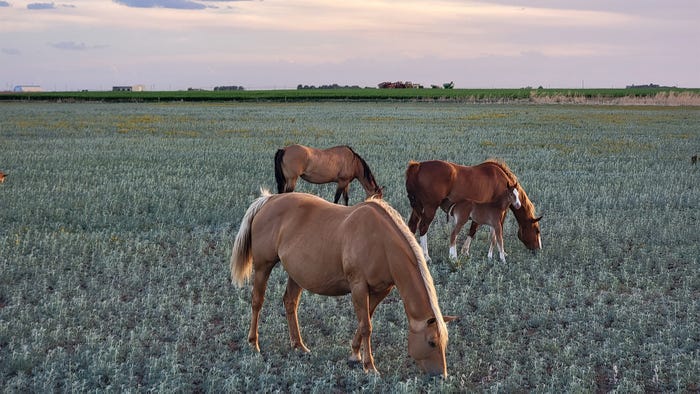
President Barrack Obama’s signature last week on a Congressional spending bill has authorized the return of USDA inspections of horse meat and plants, clearing the way for horse slaughterhouse operations in the United States, which have been inoperative since 2007.

While the slaughter of horses in the U.S. has been an emotional issue through the years, proponents of the issue argue the law goes a long way in promoting humane treatment and disposal of equine that are infirmed or otherwise beyond their usefulness and will also clear the way for better management of herds on non-federal lands.

“From the standpoint of the horse market this is a positive development,” says Dr. Dennis Sigler, horse specialist for Texas AgriLife Extension Service. “This will increase the bottom line value of the animal and will provide an advantage for horse owners.”

But Sigler is quick to point out the slaughter of horses is an emotional issue.

“There is an old law on the books that lists horses as livestock in the State of Texas. But horses have played a much greater role throughout our history and we place more value on them and a greater emotional attachment than we do for beef cattle, for example, which we raise for human consumption.”

Sigler says Texas and Illinois are the only two states that have outlawed the slaughter of horses for human consumption, but when Congress eliminated funding for USDA horse meat and plant inspections back in 2006, it effectively closed down equine slaughterhouse operations in every state because the meat could not be shipped out of state. The last horse slaughterhouse in the country closed in 2007.

“This latest action from Congress doesn’t have anything to do with authorizing horse slaughterhouses. With only two exceptions, slaughterhouses are legal. But without USDA meat inspections, horse meat can no longer be shipped to buyers worldwide,” he says.

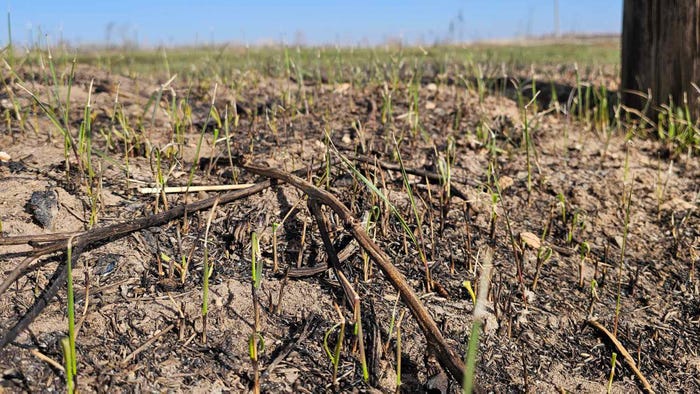
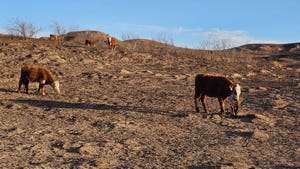
Sandy Grambort at the Humane Society of North Texas in Fort Worth agrees that something needed to be done because current drought conditions have put the humane treatment of horses at risk. She says many horse owners are abandoning their horses because of drought and wildfire-induced hay shortages across Texas that left some horses to die in the pasture.

“There is a real problem now because of the drought - a shortage of forage and even water - and horse owners are struggling and in many cases having to sell their horses at auction for very low rates or even abandoning them because the horse market is so bad,” she said.

Grambort says the Humane Society has received many horses and mules in recent weeks from owners who “simply could not feed them any longer” and that has caused many horses to be sold to buyers who transport them to slaughterhouses in Mexico.

“While the issue is as emotional for me as it is for most horse owners, something needed to happen to prevent even more horrible treatment of old and infirmed horses and those owned by people who simply can’t feed or water them any longer,” she added.

But while the new law may clear the way for the re-opening of equine slaughter operations, it probably won’t happen overnight. Sigler says he has heard through the rumor mill that there are plans for new slaughter operations in “other states,” but not in Texas.

Horse meat is a major staple in only eight countries, with China, Mexico and Kazakhstan at the top of the list. Worldwide the horse meat industry provides about 4.7 million horses a year for human consumption.

At least two Wyoming groups are considering opening horse slaughterhouses after Congress passed legislation allowing the return of USDA inspections. State Rep. Sue Wallis of Wyoming is a member of the United Horsemen and says her group formed the company Unified Equine to explore the creation of at least one horse meat processing plant in her state.

Wallis and United Horsemen, as well as other pro-slaughter groups, pushed Congress to allow USDA inspections of horse slaughterhouses.

"Restoring responsible and humane processing is a good step in the right direction. We needed a plan for dealing with the ever-growing problem of horse overpopulation on private and public lands in Wyoming," Lummis said in a media release. "More work remains but the lift on the ban is important for the humane management of horses."

The American Society for the Prevention of Cruelty to Animals (ASPCA) says they will protest any new slaughterhouses, calling it a “heartbreaking development.” But the People for the Ethical Treatment of Animals (PETA) argues that the ban on horse meat inspections has increased horse neglect and abandonment, and says they are temporarily supporting the new law.

Discuss this article 1

Actually, the kind of emotion I normally hear on this issue are things like "I know horse slaughter isn't ideal, but I think we need it." You "think" we need it? How about finding out the real statistics on the markets and this industry so as to make an informed decision?

It is unfortunate that you quote Dennis Sigler's misinformation, which is unsupported by evidence and clearly stated to support the greed for slaughter business.

These claims defy the basic supply and demand principles of high school economics.

If manufacturing overproduces beyond what the market demands, then the value of the product it produces drops. Less Supply then Demand and prices go up.

Why doesn't the horse industry get this? High scrap metal prices does not make car companies overproduce!

Selling a horse to slaughter is as widely available at American livestock auctions as it has ever been, and as a result, we are still sending the same numbers of American horses to slaughter to meet the demand for US horse meat overseas. And yet the market is still depressed. So you can eliminate slaughter as the reason the market is depressed and assume moving processing back to the states will have no impact on the market.

Doesn't really take a genius to realize the depressed market is entirely due to the depressed economy and the bad business practices of breeders who continue to manufacture horses when there is no market for them.

By Horse Trainer  on Dec 6, 2011
Post new comment
Sign In or register to use your Southwest Farm Press ID

(optional)

Continuing Education Courses
New Course
The course details six of the primary diseases affecting citrus: Huanglongbing (Citrus...
Potassium nitrate has a positive effect in controlling plant pests and diseases when applied...
Farmer-to-Farmer Used Equipment