Plan to consider rural, urban needs

Jan 4, 2001 12:00 PM, Ron Smith

Texans work to guarantee water availability well into the century

THE DILEMMA: How to guarantee a reliable source of water well into the 21st Century from a resource that's being mined and is continuing to diminish.

The solution: Folks in Texas are working hard to find one, but the bottom line will be to identify areas of waste and plug them up.

"We have to reduce demand," says C.E. Williams, manager of the Panhandle Groundwater Conservation District.

Williams, with other area representatives, served on a regional water planning committee charged under state law to devise a plan that will assure an adequate supply of water for the area through 2050.

Williams discussed the committee's findings recently at a Texas Agricultural Irrigation Association seminar in Amarillo. The challenges are significant, he says. "The Ogalalla Aquifer is a finite resource, and it's being mined. There is no surplus."

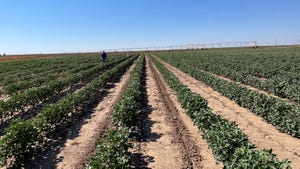
The biggest water user is agricultural irrigation, accounting for 89 percent of total demand. Some 96 percent of the demand is met with underground water; only four percent comes from surface resources.

"But that use also comes with a $1.5 billion economic advantage to the 21 counties in the district," Williams says.

Williams' committee was charged with developing use patterns, project demand into 2050 and devising remedies for projected shortfalls.

"We can't assume we'll use more than 50 percent of our storage capacity," Williams says. "Most counties came in below that, but a few are above it. We had to determine future use and we've found some serious problems within some counties."

He says the committee found no cost-effective way to provide additional irrigation water. Improving efficiency is the only option, he says.

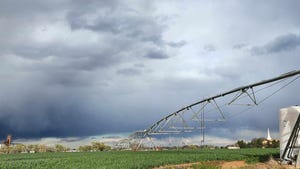
"We must reduce demand. That may mean changing crop varieties to shorter season selections. We may see more conservation tillage and changes in irrigation equipment. We'll almost certainly have to change from furrow irrigation to a more efficient method."

Williams says continuing data collection regarding sources and needs will be critical to evaluate and provide for irrigation needs.

"Metering will be imperative," he says. "And monitoring use will be in the farmer's interest."

He says the committee has identified potential sites for additional reservoirs. "We're also looking at water quality as well as quantity. We're studying feasibility of reusing water."

Williams says maintaining or creating water districts will be essential to protect rural area water rights.

"Local control of water resources is important," he says. "We don't want to turn our resources over to the sate government."

The big challenge, he says is "to permit water use requests within the district and maintain a 50 percent storage requirement."

Get Copyright ClearanceWant to use this article? Click here for options!
© 2008 Penton Media, Inc.


Latest Jobs

resources

events icon events

product info icon tradeshows

tradeshow icon digests

research icon photos

Continuing Education

Accredited in Florida, Georgia, New Mexico, Oklahoma, Texas, South Carolina and Tennessee:


(New Course)
Weed Resistance Management in Cotton

This course covers a wide range of options to effectively control weeds in cotton and reduce the risk of weed resistance management. It is accredited for hours/units for licensed/accredited applicators in 7 U.S. Cotton Belt states (Florida, Georgia, New Mexico, Oklahoma, Texas, South Carolina an d Tennessee. CCA credit is pending).

For Texas, Oklahoma and New Mexico Licensed Applicators

A free online continuing education course on spray drift management accredited by the Texas and Oklahoma departments of agriculture.

Back to Top

Browse Print Issues

Additional Resources

subscribe to Farm Press Daily Delta Farm Press Southeastt Farm Press Western Farm Press