Johanns announces conservation reserve program actions to reduce wildfire effects

Mar 22, 2006 9:09 AM

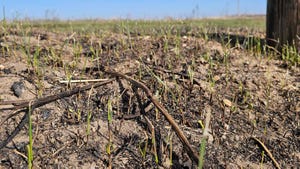
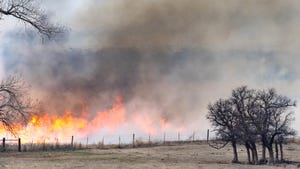
"The wildfires in Texas and Oklahoma have burned more than one million acres, devastating many rural communities, as well as our farmers and ranchers," said Agriculture Secretary Mike Johanns.

Agriculture Secretary Mike Johanns today announced that agricultural producers in six Oklahoma counties and 27 north Texas counties currently being impacted by wildfires can remove dry grass on and move cattle to Conservation Reserve Program (CRP) acreage, without facing charges for grazing value or the baled value of removed forage.

"The wildfires in Texas and Oklahoma have burned more than one million acres, devastating many rural communities, as well as our farmers and ranchers," said Johanns. "Today I'm announcing that USDA will assist producers who need to immediately relocate livestock from burned pastures by opening CRP acreage to them. This action will also have an added benefit of helping to lower the risks of additional wildfires."

Unusually dry conditions, along with high winds, dry grass and brush, caused the extreme fire conditions. The six affected Oklahoma counties are: Washita, Canadian, Jefferson, Custer, Cleveland and Osage. The 27 Texas counties are: Armstrong, Briscoe, Carson, Castro, Childress, Collingsworth, Cottle, Dallam, Deaf Smith, Donley, Gray, Hall, Hansford, Hartley, Hemphill, Hutchinson, Lipscomb, Moore, Motley, Ochiltree, Oldham, Potter, Randall, Roberts, Sherman, Swisher and Wheeler.

CRP participants in the Oklahoma and Texas counties can voluntarily remove excess dry grass cover on CRP-enrolled land, which will help to reduce fire potential. On a case-by-case basis, USDA Farm Service Agency (FSA) county offices will grant authority for CRP participants to remove the dry grass for the next 30 days.

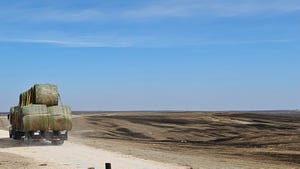
FSA officials will work with local public safety officials to comply with local fire regulations. Producers can bale CRP grass to create firebreaks and reduce potential fire threats. Controlled burns are subject to local oversight and regulation. Any cover removed must be destroyed or donated to local livestock producers whose rangeland or pastureland has been destroyed by the wildfires.

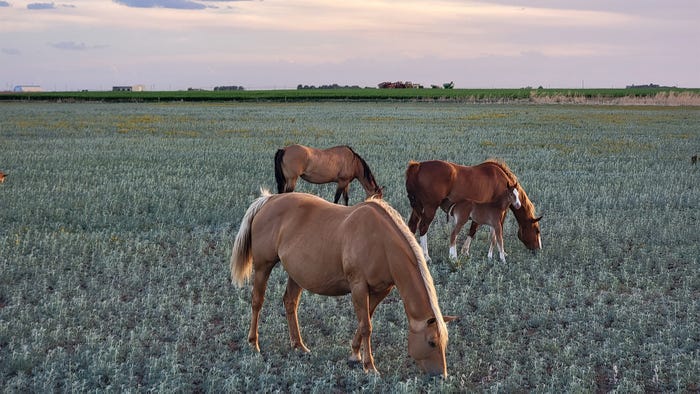
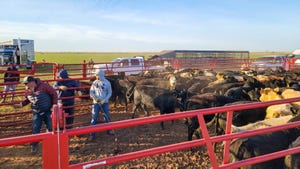
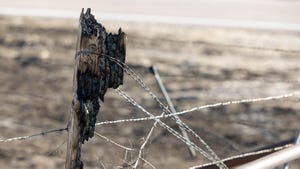
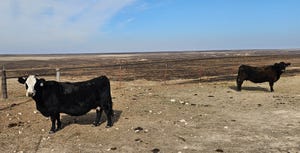
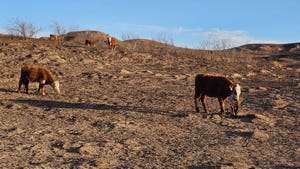
In addition, many livestock producers in the affected counties have lost a large portion of rangeland, pastureland and fences. On a case-by-case basis, FSA county offices will grant permission for CRP participants in these counties to move cattle to CRP land for the next 60 days. Authority is limited to livestock producers who actually lost pasture or fences due to the wildfires. USDA will not charge participating producers for the grazing value or the baled value of removed forage.

FSA will also provide cost-share assistance for producers whose CRP land was burned by the wildfires. The cost-share will be used to reseed damaged fields that would not regenerate without reseeding.

The USDA Forest Service as also deployed resources to assist in fighting the wildfires in Texas, Oklahoma and surrounding states. In Texas and Oklahoma, the Forest Service has committed 15 aircraft, including four of the nation's five available large air tankers, 23 units of equipment (dozers and engines) and more than 300 personnel to fight the wildfires.

More information on the CRP Texas wildfire assistance is available at local Texas FSA offices and online at: http://disaster.fsa.usda.gov/fsa.asp.

Get Copyright ClearanceWant to use this article? Click here for options!
© 2009 Penton Media, Inc.


Latest Jobs

resources

events icon events

product info icon tradeshows

tradeshow icon digests

research icon photos

Continuing Education

Accredited in Florida, Georgia, New Mexico, Oklahoma, Texas, South Carolina and Tennessee:


(New Course)
Weed Resistance Management in Cotton

This course covers a wide range of options to effectively control weeds in cotton and reduce the risk of weed resistance management. It is accredited for hours/units for licensed/accredited applicators in 7 U.S. Cotton Belt states (Florida, Georgia, New Mexico, Oklahoma, Texas, South Carolina an d Tennessee. CCA credit is pending).

(New Course)
New Mode of Action Chemistry for Vegetable Production

Integration of a new mode of action compound like Coragen into IPM and IRM programs to control Lepidoptera in leafy greens, fruiting vegetables, peppers and brassica or cole crops is always welcome. This online CE accredited course details how best to use this new mode of action insecticide in intensive vegetable production. It is accredited by the Certified Crop Adviser (CCA) program and by state agencies for licensed applicators in Texas, Georgia, Florida, New Jersey and Pennsylvania.

This course is accredited in Texas, Oklahoma, New Mexico, Virginia, West Virginia and Wyoming as well as for CCA credits:

(New Course)
Spray Drift Management

Keeping crop protection chemicals on the crop for which they are intended has been a cornerstone of farming not only to protect neighboring crops, but to not waste money allowing products to drift off the intended target. This accredited online continuing education course covers the critical elements of spray drift management.

Back to Top

Browse Print Issues

Additional Resources

subscribe to Farm Press Daily Delta Farm Press Southeastt Farm Press Western Farm Press