Fewer restrictions will lead to advancements in transgenic crops

Apr 14, 2006 9:18 AM, By Blair Fannin

There’s a great opportunity for plant biologists and biotechnologists such as those within the Texas A&M University System to contribute.

Less regulation will allow public entities – including universities – to pursue more transgenic crop research, which will help reduce the number of diseases found in plants, a researcher said recently.

“The impact of regulatory costs on getting a transgenic crop to the field and commercialized is very high,” said Roger Beachy, president of the Danforth Plant Science Center.

With commercialization costs of $1 million to $50 million, most research investment is spent on high-return crops, such as cotton, corn and soybeans, Beachy said.

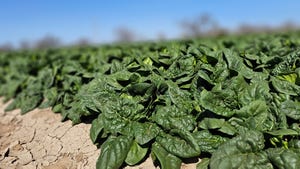
“But small crops important to Texas and California, like vegetables, are mostly locally-grown produce and are inaccessible,” he said.

Beachy was the keynote speaker at the Molecular and Environmental Plant Sciences Symposium at Texas A&M University.

The high cost for commercialization “prices us from participating in this sector,” Beachy said. This means bacterial diseases and fungi on smaller-return crops will continue to be treated by chemical pesticides.

“We are being hamstrung, I think, by current policies on regulation and the cost that regulation imposes,” he said. “Don’t get me wrong, regulation is important, but let’s do it with a sense of what agriculture is and can be, and how biotechnology can play an important role.

“We don’t want to expose the public to danger; that’s not my point. My point is there are some things out there that we know are safe: these are genes moved from one plant to another plant. There’s a great opportunity for plant biologists and biotechnologists such as those within the Texas A&M University System to contribute.”

Beachy, who in the 1980s pioneered the development of virus-resistance in plants through the use of transgenic technology, continues to examine protein movement in tobacco mosaic virus.

Another area of his research includes mechanisms, which express viral coat proteins responsible for disease-resistance in transgenic plants.

His discoveries in the 1980s were part of an effort to combat tobacco streak virus in India’s transgenic groundnuts. The disease also has affected cotton, marigolds, okra and sunflowers, he said.

“It looks like this 20-year-old technology will be useful in India, and it does it in a setting where it will affect up to 20 million farmers,” he said.

Beachy said his approach to studying viruses transmitted in transgenic plants is to understand fully what the pathogen does. “Otherwise, you’re taking a shotgun approach,” he said.

b-fannin@tamu.edu

Get Copyright ClearanceWant to use this article? Click here for options!
© 2009 Penton Media, Inc.


Latest Jobs

resources

events icon events

product info icon tradeshows

tradeshow icon digests

research icon photos

Continuing Education

Accredited in Florida, Georgia, New Mexico, Oklahoma, Texas, South Carolina and Tennessee:


(New Course)
Weed Resistance Management in Cotton

This course covers a wide range of options to effectively control weeds in cotton and reduce the risk of weed resistance management. It is accredited for hours/units for licensed/accredited applicators in 7 U.S. Cotton Belt states (Florida, Georgia, New Mexico, Oklahoma, Texas, South Carolina an d Tennessee. CCA credit is pending).

(New Course)
New Mode of Action Chemistry for Vegetable Production

Integration of a new mode of action compound like Coragen into IPM and IRM programs to control Lepidoptera in leafy greens, fruiting vegetables, peppers and brassica or cole crops is always welcome. This online CE accredited course details how best to use this new mode of action insecticide in intensive vegetable production. It is accredited by the Certified Crop Adviser (CCA) program and by state agencies for licensed applicators in Texas, Georgia, Florida, New Jersey and Pennsylvania.

This course is accredited in Texas, Oklahoma, New Mexico, Virginia, West Virginia and Wyoming as well as for CCA credits:

(New Course)
Spray Drift Management

Keeping crop protection chemicals on the crop for which they are intended has been a cornerstone of farming not only to protect neighboring crops, but to not waste money allowing products to drift off the intended target. This accredited online continuing education course covers the critical elements of spray drift management.

Back to Top

Browse Print Issues

Additional Resources

subscribe to Farm Press Daily Delta Farm Press Southeastt Farm Press Western Farm Press