Energy production offers opportunities to farmers

Apr 20, 2006 9:11 AM, By Ron Smith

Energy production provides farmers an opportunity to earn a living from the market place without relying on a government safety net.

Despite the negatives, and there are plenty of those, America’s farmers face significant opportunities as they gear up to help solve the nation’s energy crisis.

“Fuels from the farm,” says Tom Buis, president of the National Farmers Union, provides agriculture the chance to capitalize on its ability to produce grains and cellulose and to harness the wind to wean the country from reliance on fossil fuels from foreign sources.

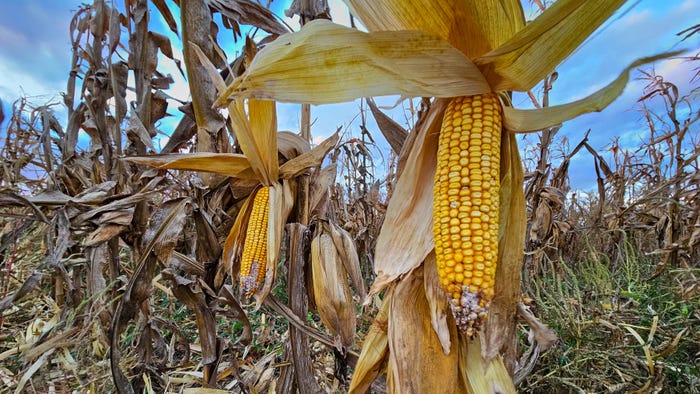
“Corn producers have opportunities with ethanol,” Buis said during a recent stop in Dallas, Texas, part of a Southern tour of both farming and seafood industries.

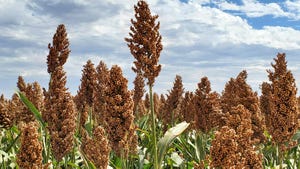
“But we also have opportunities to produce fuel from other sources. Ethanol can come from a wide range of products. And bio-diesel offers tremendous energy advantages.”

Buis said farmer-owned cooperatives hold the key for successful energy agriculture. He said Minnesota co-ops currently produce significant amounts of renewable fuels, partly from rendered animal oils.

“But interest in ethanol has been spurred by the Federal Air Standards affecting oxygen in fuels. We have two ways to get oxygen into fuel, ethanol or MTBE, which has environmental concerns. MTBE is not yet banned but the oil industry is already switching away from it.

“Also, the energy bill passed last year stipulates that the federal government will use 7.5 million gallons of renewable fuels annually. That’s more than double the current requirement and production was already going up.”

Rural American, Buis said, will benefit from the fuel standard and the increased focus on renewable energy. As farmers build co-ops they create jobs and improve prices for commodities.

Wind energy also holds promise for many rural areas, especially in the Southwest. “We hope to see an initiative in the next farm bill for a commitment to build transmission lines for (wind energy) from the remote areas where it’s generated to where it’s needed,” he said.

He also said the country needs improved infrastructure to move ethanol and bio-diesel.

Energy production provides farmers an opportunity to earn a living from the market place without relying on a government safety net. “We still need a safety net,” he said, “but not when the markets are functioning properly.

“Energy production increases domestic demand and gets us away from moving commodities with fire-sale mentality because other countries, without our labor and environmental regulations and their willingness to manipulate their currencies, can produce them cheaper.”

Wes Sims, a Sweetwater, Texas, farmer and rancher and president of the Texas Farmers Union, said the state’s producers can produce alternative fuels. “We need farmers’ commitment to make it work,” he said.

Most of the state’s renewable energy facilities currently focus on the Texas High Plains. “But we have potential all across the state,” Sims said. “The Coastal Bend, Central Texas and other areas also offer good opportunities to build energy co-ops.”

Sims said some 500 windmills currently operate near Sweetwater.

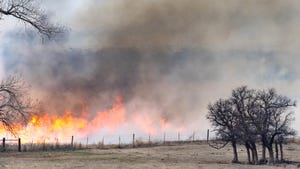
He said the NFU also is following progress of disaster legislation. Drought, aflatoxin contamination, wildfire and hurricane damage harmed the state’s producers over the last few years, he said.

He thinks the U.S. House of Representatives will sign on to a Senate bill authorizing some $4 billion in disaster assistance.

Buis said the bill would not include offsets (from other farm programs) even though the administration opposes any new spending that comes without trimming an equal amount from other areas.

Buis said low poll numbers in an election year could save the bill from veto. “Changes in House Leadership also may result in more support,” he said.

He said farmers deserve attention. Following the 2004 election, “farmers seem to have been abandoned.”

Agriculture still has champions in both houses, however. Buis cited Jerry Moran, Republican from Kansas; Frank Lucas, Republican from Oklahoma; Stephanie Herseth, Democrat from South Dakota; and Tom Harkin, Democrat from Iowa, as strong supporters in the House.

He said Thad Cochran, Republican from Mississippi, is a force in the Senate. “And Saxby Chambliss (Chairman of the Senate Agriculture Committee) stands up to the administration.”

Buis said farm country also faces social dilemmas such as adequate health care and education.

“Rural areas are losing health care services,” he said. “Health care professionals are leaving and emergency facilities are often far away. This is another challenge for farm programs.”

Buis said a stronger agricultural economy provides an answer to both a health care and an education void in rural areas. If farmers get decent prices for commodities, communities benefit. That, he said, beats a “regressive funding such as higher property taxes.”

He said immigration reform could have significant effects on agriculture.

Proposals exist in both houses of Congress with significantly different approaches. “The House of Representatives version is more punitive,” he said.

But neither approach addresses the root problem. “We have no border issues with Canada,” he said. “But people on our Southern border want to make more money. They want more economic opportunities than they can get in their own countries.”

Buis said trade agreements should be part of the solution.

“We can’t dictate how other countries treat their workers,” he said, “but as long as a disparity (with wages and living standards) exists, it does not matter how big a wall we build. We need long-term solutions.”

He acknowledged that farms, especially labor-intensive ones, rely on migrant labor and that overly restrictive immigration policies will cause disruption.

He suggests trade agreements include language that requires trading partners to alter labor standards so that wages are not as unequal.

He said African nations’ claims that American farm programs are the reason they cannot trade agricultural products profitable is “simply not true.”

He said doing away with the farm programs would result in devaluation of land prices. “And the price of cotton would still go down and the United States would be a low-cost producer, disrupting the world market similar to results from the land devaluation in the 1980s, which resulted in farm bankruptcies and also a bankrupt Farm Credit System. That took decades to turn around.”

He said organizations such as Oxfam spout misinformation about U.S. farm programs. “Farmers all over the world have the same problems with prices and markets,” he said.

The difference for many developing nations is that they have no environmental standards, no food safety standards and no labor regulations that “are verifiable.”

Sims said farmers, as they anticipate new rounds of farm bill debates, cannot afford to sit and wait for someone to carry the burden for them. “Farmers have to get politically active,” he said. “They have to know legislators personally. They have to go to meetings, ask questions and demand answers.”

e-mail: rsmith@farmpress.com

Get Copyright ClearanceWant to use this article? Click here for options!
© 2010 Penton Media, Inc.


Latest Jobs

‘Navigable’ waters debate on hold

Subscribe to RSS headline updates from:
Powered by FeedBurner

Continuing Education

Accredited in Florida, Georgia, New Mexico, Oklahoma, Texas, South Carolina and Tennessee:


(New Course)
Weed Resistance Management in Cotton


This course covers a wide range of options to effectively control weeds in cotton and reduce the risk of weed resistance management. It is accredited for hours/units for licensed/accredited applicators in 7 U.S. Cotton Belt states (Florida, Georgia, New Mexico, Oklahoma, Texas, South Carolina an d Tennessee. CCA credit is pending).

(New Course)
New Mode of Action Chemistry for Vegetable Production

Integration of a new mode of action compound like Coragen into IPM and IRM programs to control Lepidoptera in leafy greens, fruiting vegetables, peppers and brassica or cole crops is always welcome. This online CE accredited course details how best to use this new mode of action insecticide in intensive vegetable production. It is accredited by the Certified Crop Adviser (CCA) program and by state agencies for licensed applicators in Texas, Georgia, Florida, New Jersey and Pennsylvania.

This course is accredited in Texas, Oklahoma, New Mexico, Virginia, West Virginia and Wyoming as well as for CCA credits:

(New Course)
Spray Drift Management

Keeping crop protection chemicals on the crop for which they are intended has been a cornerstone of farming not only to protect neighboring crops, but to not waste money allowing products to drift off the intended target. This accredited online continuing education course covers the critical elements of spray drift management.

New Course
The ABCs of MRLs

American agriculture exports 20 to 30 percent of its production annually. For specific commodities, the percentage is much higher. When recommending and applying pest management products for crops, license Pest Control Advisers (PCAs)  and applicators and farmers must be aware of which products applied are in compliance with Maximum Residue Limits (MRLs) established by foreign customers. This CE course details the MRL issue and why compliance is critical to marketing into world trade.

Top 10 Articles of 2008

Back to Top

Browse Print Issues

Additional Resources

subscribe to Farm Press Daily Delta Farm Press Southeastt Farm Press Western Farm Press