Conservation plan leads to financial help on the farm

Jul 17, 2006 9:09 AM, By Dee Ann Burkes

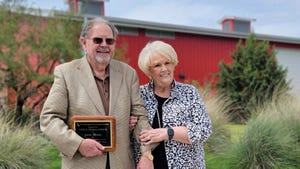
Farming over the Edwards Aquifer for over 30 years, Lawrence Friesenhahn is very conscious of his water use. In fact he’s conscious of all his farming resources: water, soil, electricity, fuel, equipment and money.

That’s why he contacted the USDA-Natural Resources Conservation Service to develop a conservation plan when he first started farming. He wanted to make sure he was getting the most crop for his money, and using his resources wisely.

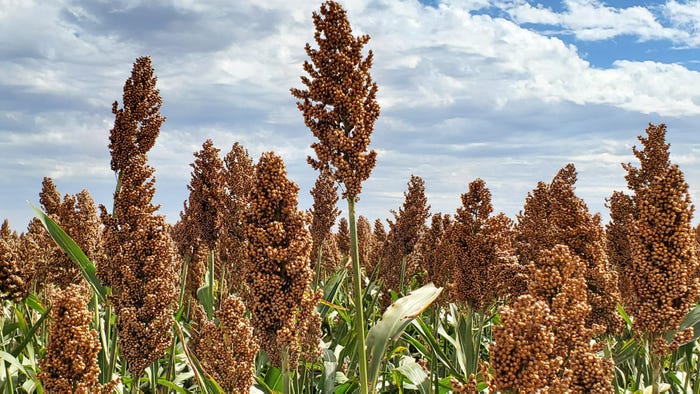
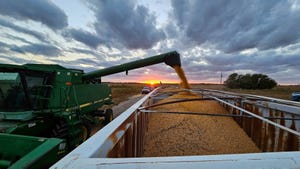
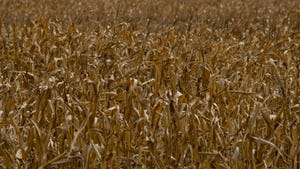
Friesenhahn grows corn, cotton and grain sorghum on his farm just south of Knippa, Texas. He is pleased to report that his conservation plan has served him well.

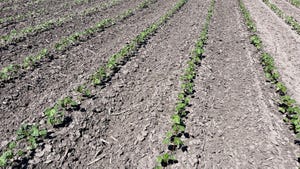
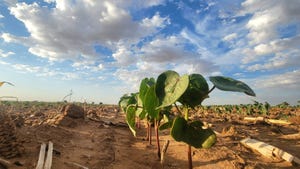
“I started practicing no-till conservation 10 years ago,” Friesenhahn reports. “My yields are equal to or better than anyone else in the area. My maintenance repairs have gone down to about one quarter of what they were 10 or15 years ago. I don’t have any wind or water erosion, so I’ve saved soil and I’ve cut my water usage in half.

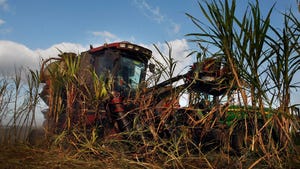
“And all of that has saved me money,” he adds. “My machinery lasts longer because I use it less, pumping costs are reduced, repairs and maintenance are minimal and fuel expenses are reduced because I don’t make so many passes over the land.”

Although he is a seasoned farmer, Friesenhahn credits the NRCS irrigation team serving Bexar, Medina and Uvalde counties in South Texas for a lot of technical assistance and scientific evaluations on his operation.

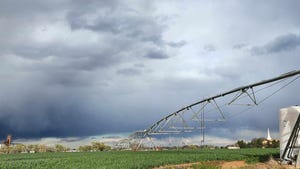
“They have been a good sounding board,” Friesenhahn says. “They helped me do an evaluation on my sprinkler system and determined it was 98 percent efficient – which is exactly the way I designed it.

“All you have to do is ask a question and they’ll have an answer that will help you out.”

According to NRCS Agronomist Willie Durham, Friesenhahn has led the conservation revolution in the area.

“People are starting to realize conservation practices Mr. Friesenhahn has been using over the years are not only good for the land and the Edwards Aquifer, it is good for their pocketbooks too,” Durham says.

“Last year was hot and dry with double fuel prices. In those kinds of years people start paying attention to how they can conserve resources, and no-till is a very cost effective, yet productive alternative for them.”

As a result of NRCS field days, one-on-one professional assistance from NRCS staff and Friesenhahn’s personal success with no-till, irrigation management and other water saving practices, more and more farmers in the area are coming into NRCS field offices and applying for programs and requesting technical assistance for improving irrigation system efficiency.

The NRCS offers landowners financial incentives for residue management, irrigation water management, pest management and nutrient management through the Environmental Quality Incentives Program (EQIP). Cost-share assistance is also available through EQIP for installing more efficient irrigation systems.

Over time, no-till can change the composition of the soil because the organic matter in the crop residue naturally breaks down into the soil. As a result the soil becomes more porous and crumbly, allowing water to be more readily absorbed. In conventionally tilled fields, increased traffic and plowing compact the soil, creating a crust that ends up repelling water, which can lead to water erosion problems.

NRCS scientists have studied the soil in fields where Friesenhahn has practiced no-till for more than a decade. They found corn roots and earthworms as deep as six feet beneath the soil’s surface, which indicate excellent soil condition.

“His soil is porous so he harvests more rainfall,” Durham says. “Instead of storing water at two feet, which happens in conventionally tilled fields due to soil compaction, it goes six feet down in his soil. When we get 2 and 3-inch rains, it infiltrates into the soil and the rain doesn’t stand in the ditches.”

According to Durham, this also helps Friesenhahn recharge his soil with moisture so he doesn’t have to use supplemental irrigation water nearly as much as people who haven’t practiced no-till.

Because his soil can hold so much moisture he is able to use irrigation systems set to run at lower pressures, which, in addition to saving water resources, requires less energy to pump the water.

“Mr. Friesenhahn is a great example of a successful holistic program, where everything is tied together,” Durham says. “We have learned a lot of things from him, knowledge we want to transfer to other farmers so they can achieve the same benefits.

“When people start changing irrigation systems and farming practices, it takes proper planning and design to get it to work right,” he says. “We advise growers about options and help them work with irrigation system contractors to design systems that work with conservation tillage.”

But the rewards seem to be more than worth the effort involved in getting the new system going. In many cases, no-till farming improves soil quality, reduces soil erosion, saves the farmer work, reduces the need for fertilizers and fuel and increases crop yields.

Friesenhahn shares his experience with other farmers as a regular participant and speaker at NRCS irrigation field days.

“If you want to be farming in the future, you better get with the program,” Friesenhahn says. “Otherwise, the price squeeze is going to push you out. Energy prices and inputs are too high these days. If you aren’t applying every best practice there is to cut costs, you aren’t going to make it.”

Get Copyright ClearanceWant to use this article? Click here for options!
© 2009 Penton Media, Inc.


Latest Jobs

resources

events icon events

product info icon tradeshows

tradeshow icon digests

research icon photos

Continuing Education

Accredited in Florida, Georgia, New Mexico, Oklahoma, Texas, South Carolina and Tennessee:


(New Course)
Weed Resistance Management in Cotton

This course covers a wide range of options to effectively control weeds in cotton and reduce the risk of weed resistance management. It is accredited for hours/units for licensed/accredited applicators in 7 U.S. Cotton Belt states (Florida, Georgia, New Mexico, Oklahoma, Texas, South Carolina an d Tennessee. CCA credit is pending).

(New Course)
New Mode of Action Chemistry for Vegetable Production

Integration of a new mode of action compound like Coragen into IPM and IRM programs to control Lepidoptera in leafy greens, fruiting vegetables, peppers and brassica or cole crops is always welcome. This online CE accredited course details how best to use this new mode of action insecticide in intensive vegetable production. It is accredited by the Certified Crop Adviser (CCA) program and by state agencies for licensed applicators in Texas, Georgia, Florida, New Jersey and Pennsylvania.

This course is accredited in Texas, Oklahoma, New Mexico, Virginia, West Virginia and Wyoming as well as for CCA credits:

(New Course)
Spray Drift Management

Keeping crop protection chemicals on the crop for which they are intended has been a cornerstone of farming not only to protect neighboring crops, but to not waste money allowing products to drift off the intended target. This accredited online continuing education course covers the critical elements of spray drift management.

Back to Top

Browse Print Issues

Additional Resources

subscribe to Farm Press Daily Delta Farm Press Southeastt Farm Press Western Farm Press