Peanut biodiesel promising but costly alternative fuel

Nov 1, 2006 9:56 AM, By Roy Roberson
Farm Press Editorial Staff

Peanut oil first came into prominence during World War II as a replacement for scarce fossil fuel-based oils and lubricants. With domestic fuel prices at record levels, it is not surprising that scientists are again looking at peanut oil as a fuel alternative.

The primary oil used in the United States to make biodiesel fuel is soy oil. Peanut oil produces approximately 123 gallons of biodiesel per acre, compared to 50 gallons for soy oil. The problem is peanut oil on the world market is more valuable than soy oil, making conversion to biodiesel economically impractical.

Tests are underway at the University of Georgia to develop non-edible peanuts that are high in oil, and could be grown specifically for biodiesel production. These varieties are higher in oil content than currently grown runner and Virginia type varieties and would not compete on the world market with peanuts grown for food and commercial cooking oil products.

Georgia Brown is a commercially grown peanut that is high oil content, but not good for commercial oil. Georganic is a test variety that is high in oil, low in input costs and not suitable for commercial use. Georganic, or similar varieties will likely be the future of peanut biodiesel, according to Daniel Geller, a research engineer at the University of Georgia.

Speaking at the recent Southern Peanut Growers Association meeting in Panama City Beach, Fla., Geller says biodiesel from peanut oil is easy to make, but difficult to make right. ‘Right,’ Geller explains, means making biodiesel that complies with government specifications. Otherwise, government payments of $1.00 per gallon for using biodiesel won’t apply.

The dollar per gallon subsidy, Geller contends, is driving the biodiesel industry. Even with soy oil, the price is not competitive with diesel, without the dollar per gallon subsidy.

Biodiesel from peanut oil is compatible with fossil fuel-based biodiesel and can be mixed in any combination. Compared to fossil-based biodiesel, there will likely be a 2 percen to 5 percent reduction in miles per gallon with either soy or peanut oil-based fuel. According to Geller, this is not significant and can likely be overcome by tweaking diesel engines.

In tests in his lab at the University of Georgia, Geller says peanut biodiesel is less toxic to the atmosphere and has a cleaning effect on diesel engines. He says peanut diesel can gel in the engine at temperatures as high as 50 degrees F, but the problem is easily fixed, and not likely to be a limiting factor in commercial use.

“Running peanut biodiesel cleans residue from diesel engines. This can be good and bad, because the particles tend to clog up the filter on an engine. After cleaning the filters a few times, peanut biodiesel actually runs much cleaner than diesel,” Geller explains.

Worldwide, the demand for alternative fuels is huge. In the United States the demand is critical. The United States has roughly 6 percent of the world’s population, but consumes nearly 25 percent of all the fossil fuel produced worldwide.

The fossil fuel supply is finite and emerging nations, especially China and India have dramatically increased fossil fuel use. Within the past decade, China has surpassed Japan, Russia and Germany to become the world’s second largest consumer of petroleum products, though still only using 7 percent of world production. India has gone from virtually no use (on a worldwide scale) to using 2.5 percent of world production.

Perhaps of greatest concern is that nearly 25 percent of the world oil reserves are in Saudi Arabia, with large percentages in Iraq, Iran and other Middle East countries with strained political relationships with the United States.

“There is no silver bullet solution to our fuel crisis, more like silver buckshot,” says Phillip Badger, president of General Bioenergy Inc., in Florence, Ala.

Badger contends that biodiesel will be one of the silver buckshot. Biomass and starch and sugar conversions, such as ethanol, will be the primary sources of alternative fuel.

Badger says that anything made from petroleum can be made from biomass. In the United States the goal is to produce 1.3 billion metric tons of biomass by 2030. Cellulose, starch and sugar from biomass can replace one-third of total U.S. oil use by 2030.

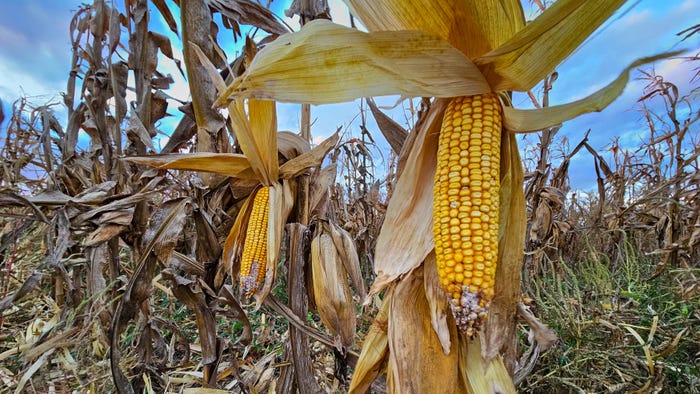
Currently, Americans use roughly 120 billion gallons of gas annually. Ethanol plants in the United States currently produce approximately 4.5 billion gallons annually, with 84 percent coming from corn. Ethanol production is predicted to top out at near 12 billion gallons per year in the next five years. If production reaches 15-17 billion gallons per year, corn-based food production will be affected.

e-mail: rroberson@farmpress.com

Get Copyright ClearanceWant to use this article? Click here for options!
© 2009 Penton Media, Inc.


Latest Jobs

resources

events icon events

product info icon tradeshows

tradeshow icon digests

research icon photos

Continuing Education

Accredited in Florida, Georgia, New Mexico, Oklahoma, Texas, South Carolina and Tennessee:


(New Course)
Weed Resistance Management in Cotton

This course covers a wide range of options to effectively control weeds in cotton and reduce the risk of weed resistance management. It is accredited for hours/units for licensed/accredited applicators in 7 U.S. Cotton Belt states (Florida, Georgia, New Mexico, Oklahoma, Texas, South Carolina an d Tennessee. CCA credit is pending).

(New Course)
New Mode of Action Chemistry for Vegetable Production

Integration of a new mode of action compound like Coragen into IPM and IRM programs to control Lepidoptera in leafy greens, fruiting vegetables, peppers and brassica or cole crops is always welcome. This online CE accredited course details how best to use this new mode of action insecticide in intensive vegetable production. It is accredited by the Certified Crop Adviser (CCA) program and by state agencies for licensed applicators in Texas, Georgia, Florida, New Jersey and Pennsylvania.

This course is accredited in Texas, Oklahoma, New Mexico, Virginia, West Virginia and Wyoming as well as for CCA credits:

(New Course)
Spray Drift Management

Keeping crop protection chemicals on the crop for which they are intended has been a cornerstone of farming not only to protect neighboring crops, but to not waste money allowing products to drift off the intended target. This accredited online continuing education course covers the critical elements of spray drift management.

Back to Top

Browse Print Issues

Additional Resources

subscribe to Farm Press Daily Delta Farm Press Southeastt Farm Press Western Farm Press