Share

Crop insurance coverage pays for Texas farmers

Mar 10, 2010 10:53 AM, By Ron Smith, Farm Press Editorial Staff

Hill County, Texas, farmer Albert Sulak admits that about 10 years ago he was a bit skeptical about the value of crop insurance.

“I thought about insuring my vehicles, my house and I knew I needed health insurance,” he said. He decided to try crop insurance and still was not impressed for two or three years. “I didn’t need it,” Sulak said, during the Blackland Income Growth (BIG) conference in Waco. “Then I had two or three dry years.”

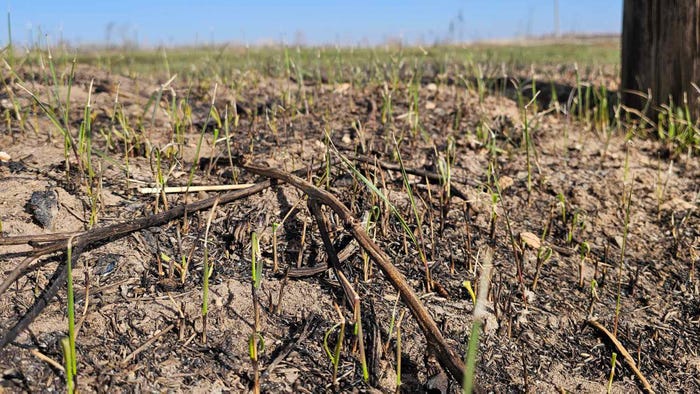
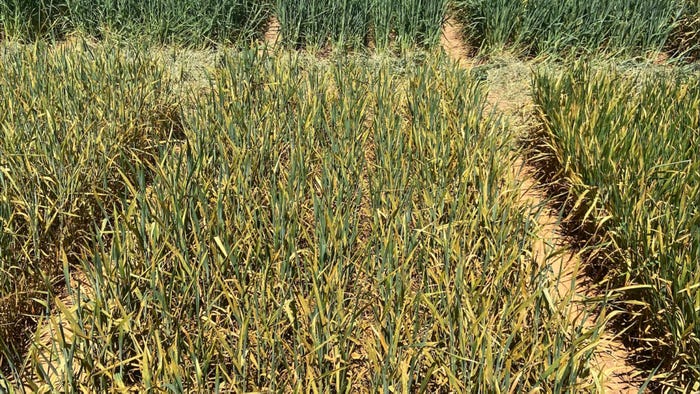
And last spring made a believer out of him. “We had a late freeze that hurt our wheat crop. Crop insurance kept some of us in business after that loss. With the expenses involved in making a crop these days, we need crop insurance.”

Jason Johnson, Texas AgriLife Extension economist-management, said records prove the point. “In the past 15 years of Texas crop insurance history and loss ratios, only four years did Texas farmers pay more for insurance than they got out of it. Variable weather patterns in Texas make crop insurance valuable.”

He said government subsidies for insurance premiums make coverage an even better bargain. For catastrophic (CAT) coverage, the government pays the premium and the policy covers 55 percent of crop price and 50 percent of yield. “That’s not much protection,” Johnson said. “Higher protection levels get less federal subsidization, but coverage may be as high as 85 percent of production and 100 percent of price.”

He said Actual Production History (APH) “protects farmers from a wide range of natural causes at levels from 50 percent to 85 percent. Farmers can select the range they want and premiums are higher at the upper levels of protection.” Price coverage levels are set by the Risk Management Agency.

Some wheat and grain sorghum farmers may be eligible for group risk plans (GRIP) that protect against widespread crop failure. Coverage is based on average yield for a county. If yield drops below a certain level covered producers receive payments regardless of individual farm yield. “A farmer could have losses on his farm and receive no payment or he could have no losses and receive a payment,” Johnson said.

He said crop revenue coverage (CRC) protects against production and market losses. Price protection is based on new crop futures prices with coverage ranging from 50 percent to 85 percent, available in 5 percent increments.

“If prices are higher by harvest, the revenue guarantee increases accordingly,” Johnson said. This policy works something like a put option to establish a price floor.

Some sorghum growers may opt for income protection policies that provide a minimum gross income per acre at 65 percent to 85 percent of expected revenue.

Johnson said crop insurance covers two of the three legs of risk farmers face with each crop. They can insure against production and price losses, but can do nothing about production costs. “No policy addresses that,” he said.

He also recommended that farmers evaluate their individual needs before selecting a policy. “If a farmer has good marketing skills he may just need APH coverage. If not, he might need CRC. Pick a level of coverage that protects an individual farm.”

Johnson said lenders may require farmers to pick a product that focuses on individual losses and not on county averages.

He said farmers in the Texas Blacklands have received significantly more money from crop insurance than they have paid in, especially for wheat, cotton and corn. Coverage at 65 percent to 75 percent seems to be a popular range.

“In 2009 and 2008, insurance paid off for Blacklands farmers. In 2007 insurance did not pay, but that was a good crop year.”

Policies are also available for pasture and rangeland. Coverage on those is based on rainfall. “This is especially good for hay producers,” Johnson said.

email: rsmith@farmpress.com

Get Copyright ClearanceWant to use this article? Click here for options!
© 2010 Penton Media, Inc.


Latest Jobs

Biofuels without credits?

View the new video archive page!

Subscribe to RSS headline updates from:
Powered by FeedBurner

Continuing Education

Accredited for Certified Crop Adviser (CCA) units and hours/credit in Texas, New Mexico, Oklahoma, Tennessee, South Carolina, Virginia, Florida, Georgia, Maine and Delaware:


Weed Resistance Management in Cotton


This course covers a wide range of options to effectively control weeds in cotton and reduce the risk of weed resistance management. It is accredited for hours/units for licensed/accredited applicators in 7 U.S. Cotton Belt states (Florida, Georgia, New Mexico, Oklahoma, Texas, South Carolina an d Tennessee. CCA credit is pending).

Accredited for continuing education/recertification hours/units for pest control advisers/licensed applicators in California, Arizona, Georgia, Texas, Florida, Virginia, Pennsylvania, New Jersey, Delaware, Oregon, Maine, Washington and for Certified Crop Advisers:


New Mode of Action Chemistry for Vegetable Production

Integration of a new mode of action compound like Coragen into IPM and IRM programs to control Lepidoptera in leafy greens, fruiting vegetables, peppers and brassica or cole crops is always welcome. This online CE accredited course details how best to use this new mode of action insecticide in intensive vegetable production. It is accredited by the Certified Crop Adviser (CCA) program and by state agencies for licensed applicators in Texas, Georgia, Florida, New Jersey and Pennsylvania.

This course is accredited in Texas, Oklahoma, New Mexico, Virginia, West Virginia and Wyoming as well as for CCA credits:


Spray Drift Management

Keeping crop protection chemicals on the crop for which they are intended has been a cornerstone of farming not only to protect neighboring crops, but to not waste money allowing products to drift off the intended target. This accredited online continuing education course covers the critical elements of spray drift management.

This course is accredited for CE hours/units in California, Arizona, Florida, Georgia, Texas, Oklahoma, New Jersey, Delaware, Maryland and for Certified Crop Advisers.:


The ABCs of MRLs

American agriculture exports 20 to 30 percent of its production annually. For specific commodities, the percentage is much higher. When recommending and applying pest management products for crops, license Pest Control Advisers (PCAs) and applicators and farmers must be aware of which products applied are in compliance with Maximum Residue Limits (MRLs) established by foreign customers. This CE course details the MRL issue and why compliance is critical to marketing into world trade.

Back to Top

Browse Print Issues

Additional Resources

subscribe to Farm Press Daily Delta Farm Press Southeastt Farm Press Western Farm Press