Economic impact of Texas Agriculture hits record $100 billion

Jan 14, 2008 10:06 AM, By Blair Fannin
Texas A&M University

Agriculture Commissioner Todd Staples touted the work ethic of Texas farmers and ranchers Tuesday discussing an economic milestone. For the first time in history, statewide agriculture production in 2007 contributed more than $100 billion to the Texas economy.

“All Texans should be proud of the dedicated men and women who live and breathe agriculture daily, providing food and fiber to feed and clothe their fellow Texans,” Staples said at the Texas A&M AgriLife Conference at Texas A&M University.

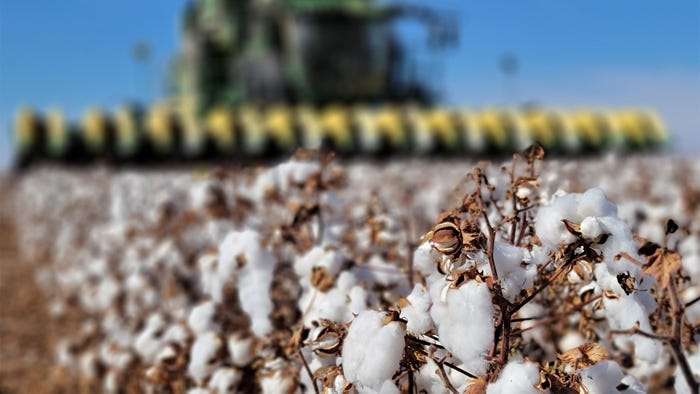
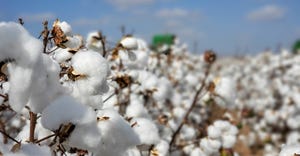
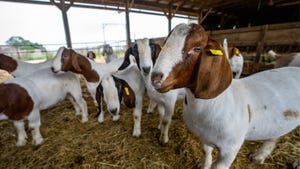
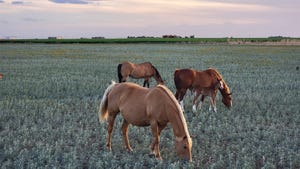
Texas leads the nation in the number of cattle, horses, goats, sheep and deer. The state also ranks first in production of cotton, wool, mohair and hay. The Texas agriculture industry employs nearly 2 million Texans, contributing approximately 9 percent of the gross state product.

“Folks, it’s an amazing story to tell,” Staples said. “We have to tell it everyday, and the key is to tell the story effectively and get people’s attention.”

One in seven individuals in Texas are employed “in some form of agriculture,” and everyone in the industry has to be involved in branding, marketing and selling, Staples said.

“Each of us have to energize our agricultural industry, excite the public and tell them how breakthroughs make their lives better,” he said.

Dr. Elsa Murano, president of Texas A&M University and former vice chancellor and dean of agriculture and life sciences, told attendees that “your work is life enhancing, and I certainly value the recognition you bring to Texas A&M University.”

Promoting partnerships and collaborative work among the colleges at Texas A&M is one of many goals Murano outlined. She touted Texas A&M’s bioenergy alliance, an ongoing research program investigating alternative fuels among both the agriculture and engineering programs, as a lead example.

U.S. Rep. Chet Edwards, D-Waco, who received the Texas A&M AgriLife Outstanding Public Servant Award, also emphasized the importance of telling Americans how important agriculture is and how it plays a key role in daily life.

“It’s more important than ever to tell the positive impact of AgriLife,” he said. “Strong values come from rural life, and it may depend on how well we tell the story agriculture is life.”

The Texas A&M AgriLife Conference brings together two of the state’s premier agencies as part of the Texas A&M University System – Texas AgriLife Research and the Texas AgriLife Extension Service – in addition to faculty that serve the College of Agriculture and Life Sciences at Texas A&M.

Get Copyright ClearanceWant to use this article? Click here for options!
© 2009 Penton Media, Inc.


Latest Jobs

resources

events icon events

product info icon tradeshows

tradeshow icon digests

research icon photos

Continuing Education

Accredited in Florida, Georgia, New Mexico, Oklahoma, Texas, South Carolina and Tennessee:


(New Course)
Weed Resistance Management in Cotton

This course covers a wide range of options to effectively control weeds in cotton and reduce the risk of weed resistance management. It is accredited for hours/units for licensed/accredited applicators in 7 U.S. Cotton Belt states (Florida, Georgia, New Mexico, Oklahoma, Texas, South Carolina an d Tennessee. CCA credit is pending).

(New Course)
New Mode of Action Chemistry for Vegetable Production

Integration of a new mode of action compound like Coragen into IPM and IRM programs to control Lepidoptera in leafy greens, fruiting vegetables, peppers and brassica or cole crops is always welcome. This online CE accredited course details how best to use this new mode of action insecticide in intensive vegetable production. It is accredited by the Certified Crop Adviser (CCA) program and by state agencies for licensed applicators in Texas, Georgia, Florida, New Jersey and Pennsylvania.

This course is accredited in Texas, Oklahoma, New Mexico, Virginia, West Virginia and Wyoming as well as for CCA credits:

(New Course)
Spray Drift Management

Keeping crop protection chemicals on the crop for which they are intended has been a cornerstone of farming not only to protect neighboring crops, but to not waste money allowing products to drift off the intended target. This accredited online continuing education course covers the critical elements of spray drift management.

Back to Top

Browse Print Issues

Additional Resources

subscribe to Farm Press Daily Delta Farm Press Southeastt Farm Press Western Farm Press