Fuel costs for ag to skyrocket under house climate bill

Oct 23, 2009 10:06 AM

A crop and livestock producer from Texas today said cap-and-trade climate change legislation could hike the cost of fuel used for farming to the point that it will have a devastating economic impact on his and similar family-owned businesses.

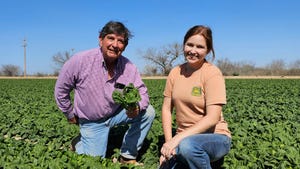
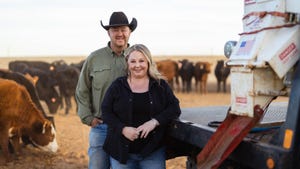
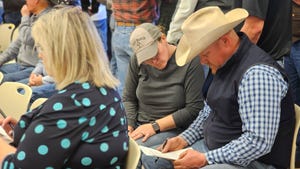
Speaking at a Capitol Hill news conference, Texas farmer and cattle producer Richard Cortese said increased fuel prices, on top of other energy-related costs, would deal a sharp blow to farmers and ranchers. Cortese, who farms near Little River, Texas, is a member of the Texas Farm Bureau board of directors.

The event, hosted by Sens. Kit Bond (R-Mo.) and Kay Bailey Hutchison (R-Texas), highlighted a new report the senators released showing that cap-and-trade legislation will result in a considerable fuel tax increase on Americans. The senators’ report is the first such effort to quantify climate change legislation’s effect on fuel costs.

According to the senators’ report, under House climate change legislation, America’s farmers and ranchers would be hit with $550 million in higher fuel costs in 2020 and $1.65 billion in 2050.

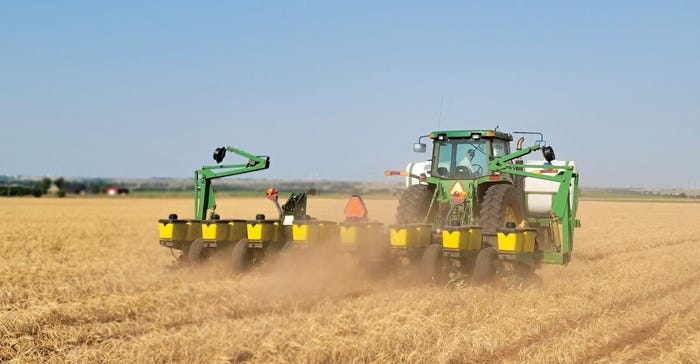
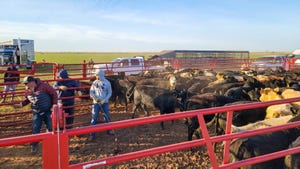
“Agriculture is an energy-intensive business,” Cortese told reporters. “I use diesel fuel for tillage, planting, harvesting and spraying. And I use gasoline for service vehicles for checking livestock, utility vehicles and small engines. Having a reliable and affordable supply of gasoline and diesel fuel is very important for my operation to continue to make a living for me and my family.”

Cortese explained that the new statistics on fuel costs under cap-and-trade legislation, included in the senators’ report, raise enormous concerns for America’s farmers and ranchers.

“The type of gasoline and diesel fuel cost increases described in this report will make it very difficult for me to continue on the farm,” Cortese said. “As a small businessman, I cannot pass along my increased fuel costs to my customers without running the risk of losing them. That means I would have to absorb any increased costs and have it consume my bottom line.”

Get Copyright ClearanceWant to use this article? Click here for options!
© 2010 Penton Media, Inc.


Latest Jobs

‘Navigable’ waters debate on hold

Subscribe to RSS headline updates from:
Powered by FeedBurner

Continuing Education

Accredited in Florida, Georgia, New Mexico, Oklahoma, Texas, South Carolina and Tennessee:


(New Course)
Weed Resistance Management in Cotton


This course covers a wide range of options to effectively control weeds in cotton and reduce the risk of weed resistance management. It is accredited for hours/units for licensed/accredited applicators in 7 U.S. Cotton Belt states (Florida, Georgia, New Mexico, Oklahoma, Texas, South Carolina an d Tennessee. CCA credit is pending).

(New Course)
New Mode of Action Chemistry for Vegetable Production

Integration of a new mode of action compound like Coragen into IPM and IRM programs to control Lepidoptera in leafy greens, fruiting vegetables, peppers and brassica or cole crops is always welcome. This online CE accredited course details how best to use this new mode of action insecticide in intensive vegetable production. It is accredited by the Certified Crop Adviser (CCA) program and by state agencies for licensed applicators in Texas, Georgia, Florida, New Jersey and Pennsylvania.

This course is accredited in Texas, Oklahoma, New Mexico, Virginia, West Virginia and Wyoming as well as for CCA credits:

(New Course)
Spray Drift Management

Keeping crop protection chemicals on the crop for which they are intended has been a cornerstone of farming not only to protect neighboring crops, but to not waste money allowing products to drift off the intended target. This accredited online continuing education course covers the critical elements of spray drift management.

New Course
The ABCs of MRLs

American agriculture exports 20 to 30 percent of its production annually. For specific commodities, the percentage is much higher. When recommending and applying pest management products for crops, license Pest Control Advisers (PCAs)  and applicators and farmers must be aware of which products applied are in compliance with Maximum Residue Limits (MRLs) established by foreign customers. This CE course details the MRL issue and why compliance is critical to marketing into world trade.

Top 10 Articles of 2008

Back to Top

Browse Print Issues

Additional Resources

subscribe to Farm Press Daily Delta Farm Press Southeastt Farm Press Western Farm Press