Patch burning: A new concept in rangeland management

Mar 17, 2008 10:02 AM


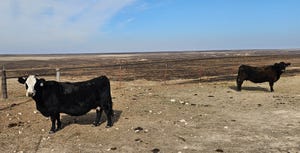
A six-year research project is underway in Woodson County, Kansas where Kansas State University scientists are working to determine how viable patch-burn grazing is for raising livestock.

Patch-burn grazing is a fairly new concept in rangeland management, but has been occurring naturally for hundreds of years, said Walt Fick, K-State Research and Extension range management specialist.

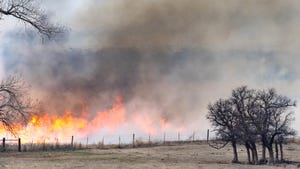
Historically, Native Americans purposely started prairie fires, and lightning did the same thing naturally. Bison and other native herbivores were attracted to the new growth that comes up after the land burned; consequently, these animals moved from grazing area to grazing area -- searching out the most attractive areas of new growth, Fick said.

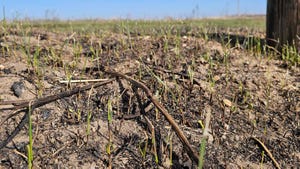
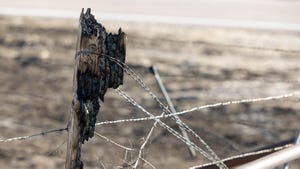
Some ranchers are mimicking that grazing pattern by sectioning a large pasture into three or more burn areas.

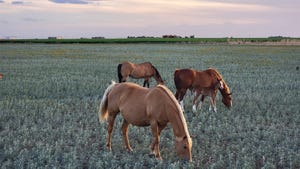
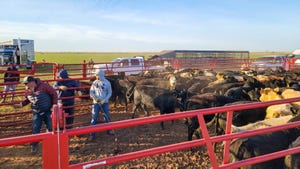
"Every year, one of those sections is prescribed burned, concentrating the grazing pressure in specific areas of the pasture," he said. "The cattle are free-roaming over the entire pasture, but tend to gravitate toward the one-third area of the pasture that has been burned, because that is where the most attractive new growth has occurred."

"When burning, producers may create burn boundaries (fire guards), but using natural breaks would be more efficient because of labor expenses," he added.

The main purpose of patch-burn grazing is ecology-driven; it has a high potential to increase biodiversity and wildlife habitat.

"Through our research, we would like to determine how it affects livestock performance, if it will compromise the health of the prairie, and if it can control the highly invasive plant, Sericea lespedeza," Fick said.

This year will be K-State´s third year with the project, completing one full cycle. So far, there has been no noticeable difference in cattle performance in the patch-burn pastures, according to the range specialist.

"Forage growth has shifted toward annual grasses and forbs, and there has been a decrease in basal cover. Sericea lespedeza plants have decreased in height because of the grazing pressure," Fick said. "Most importantly for producers, though, is maintaining the long-term health of the pasture; with increased grazing pressures, the pasture may not be able to recover. We have three more years to determine this."

Cade Rensink, K-State Research and Extension agent in Coffey County and a graduate student in agronomy, has been working with Fick on the research.

Get Copyright ClearanceWant to use this article? Click here for options!
© 2008 Penton Media, Inc.


Latest Jobs

resources

events icon events

product info icon tradeshows

tradeshow icon digests

research icon photos

Continuing Education

For Texas and Oklahoma Licensed Applicators

A free online continuing education course on spray drift management accredited by the Texas and Oklahoma departments of agriculture.

CCA Continuing Education

A free American Society of Agronomy-accredited one-CEU course on spray drift management.

ACCREDITED IN CALIFORNIA ONLY:


Almond Pest Management

Get the latest info on almond insect pest management and earn 2 hrs. CE DPR and CCA credit in California.

California Groundwater Protection Regulations

Earn 2 hrs. in California laws and regs CE and learn how to protect California groundwater supplies.

Powdery Mildew Control in California Grapevines

Learn about the No. 1 grape disease in California; earn 2 California CE hours.

ACCREDITED IN CALIFORNIA AND ARIZONA:


Insecticide Resistance Management in Agronomic and Row Crops

A 3-hr. CE approved for California and Arizona licensees and CCAs in both states.

Agronomic Weed Resistance Management in Row Crops, Trees Nuts and Vines

Weeds Resistance Management is approved for 3 hours of CE credit for all California and Arizona licensees and Certified Crop Advisers.

Lepidopterous Pest Management/ Pesticide Safety

This course is approved for 2 hours in Arizona and California (1 hr. of laws/regs; 1 hour Other) and for CCAs.

Managing Spray Drift to Minimize Problems

2-hrs laws and regs for California licensees; 2 hours in Arizona and for CCAs.

Back to Top

Browse Print Issues

Additional Resources

subscribe to Farm Press Daily Delta Farm Press Southeastt Farm Press Western Farm Press