Drought losses continue to grow for Southern Texas farmers

Aug 6, 2009 12:51 PM, Jeffrey R. Stapper, Nueces County Extension Agent-Ag/Natural Resources

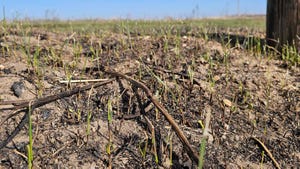
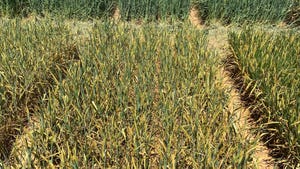
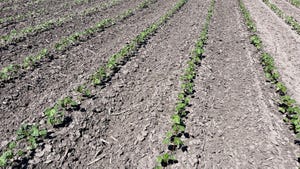
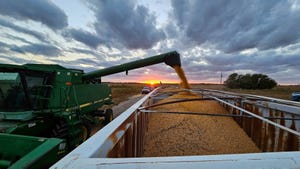
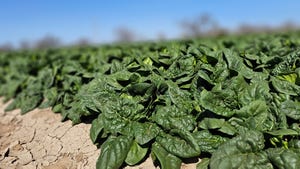
Lack of rainfall and record triple-digit temperatures have scorched crops and rangeland throughout parts of Texas causing drought losses to reach $3.6 billion, according to Texas AgriLife Extension Service economists. By the end of the year, losses could exceed $4.1 billion, the loss estimated in Texas in 2006, if sufficient rainfall isn’t received to revive crops and forage, economists said. Total crop losses this year are estimated at $2.6 billion and livestock another $974 million since November 2008.

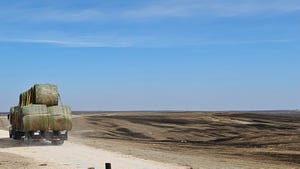
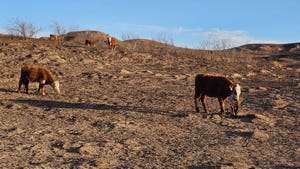
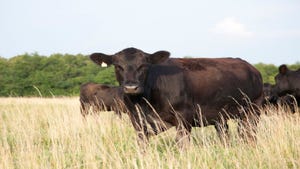
Here locally, in the Coastal Bend, crop losses alone are probably approaching $200 million. Meanwhile, the livestock operations continue to suffer. Little or no hay has been baled this year or for 2008 in South, Central or East Texas. The hay loss at mid-year is estimated at $409 million, according to economists. Hay is being shipped into south Texas from northeast Texas and other states.

Dr. Travis Miller, AgriLife Extension agronomist and a member of the Governor’s Texas Drought Preparedness Council, said the drought is not only impacting major agricultural operations but also water supplies “for more than 30 percent of the State of Texas.”

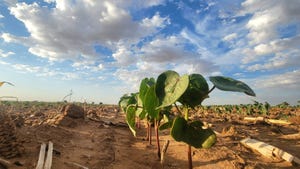
It's the hottest, driest summer on record over a large portion of the state, and locally we are more than 20 inches below normal since September of last year. In visiting with local farmers, this could be one of the worst droughts ever, as they have had years when crops emerged and then burned up, but not one in which they never got a crop to emerge.

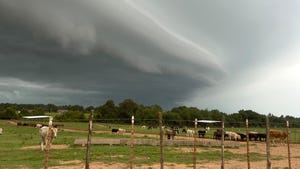
We’re actually experiencing quite a reversal in rainfall patterns in some areas with some rain falling on the normally dry western parts of the state while the traditionally wetter eastern portions are suffering severe drought conditions and prolonged 100-degree heat. Last week I was visiting family in the San Angelo area and found rangeland to be covered in green grass and the city of San Angelo is actually 1-inch above normal annual rainfall this year.

Texas Agriculture Commissioner Todd Staples said current dry conditions are adding more headaches to the state’s already overburdened agricultural producers. “We hope God will bless us with moisture to relieve some of the pressure facing our producers,” he said. “While we wait, state and federal agencies are working together to offer assistance and I urge producers to take advantage of these critical resources."

Those sources include:

The Agricultural Drought Task Force Web site provides a clearing house of drought-related information from a number of state and federal agencies. The site is divided into two distinct areas. The Resources on Drought section provides static and changing information on drought ranging from stream-flow data and weather information to links provided by the participating agencies. The News Updates/Situational Reports section features the latest items submitted by the participating agencies.

– Texas Department of Agriculture’s Hay Hotline at 1-877-429-1998 connects ranchers with hay suppliers. The resource is meant to connect those with extra hay to sell or pasture to lease with those needing it. The agency’s Disaster Resource Information Packet is also available and provides pertinent contact information for state, federal and private agricultural disaster assistance programs. See www.TexasAgriculture.gov for more information on both Texas Department of Agriculture resources.

– U.S. Department of Agriculture's Farm Service Agency provides low-interest emergency loans to help eligible producers recover from natural disasters. Loans can cover restoring or replacing essential property, essential family living expenses, production costs associated with the disaster year, reorganizing the farming operation and refinance of certain debts. Interested producers should contact the office that serves the county in which their operation is located for options available. For statewide assistance contact Brenda Carlson, public affairs specialist, U.S. Department of Agriculture Farm Service Agency at 979-680-5213, brenda.carlson@tx.usda.gov.

It is hard to find anything optimistic to say with current conditions, except that old saying, “We are one day closer to a good rain.”

Get Copyright ClearanceWant to use this article? Click here for options!
© 2009 Penton Media, Inc.


Latest Jobs

Subscribe to RSS headline updates from:
Powered by FeedBurner

Continuing Education

Accredited in Florida, Georgia, New Mexico, Oklahoma, Texas, South Carolina and Tennessee:


(New Course)
Weed Resistance Management in Cotton

This course covers a wide range of options to effectively control weeds in cotton and reduce the risk of weed resistance management. It is accredited for hours/units for licensed/accredited applicators in 7 U.S. Cotton Belt states (Florida, Georgia, New Mexico, Oklahoma, Texas, South Carolina an d Tennessee. CCA credit is pending).

(New Course)
New Mode of Action Chemistry for Vegetable Production

Integration of a new mode of action compound like Coragen into IPM and IRM programs to control Lepidoptera in leafy greens, fruiting vegetables, peppers and brassica or cole crops is always welcome. This online CE accredited course details how best to use this new mode of action insecticide in intensive vegetable production. It is accredited by the Certified Crop Adviser (CCA) program and by state agencies for licensed applicators in Texas, Georgia, Florida, New Jersey and Pennsylvania.

This course is accredited in Texas, Oklahoma, New Mexico, Virginia, West Virginia and Wyoming as well as for CCA credits:

(New Course)
Spray Drift Management

Keeping crop protection chemicals on the crop for which they are intended has been a cornerstone of farming not only to protect neighboring crops, but to not waste money allowing products to drift off the intended target. This accredited online continuing education course covers the critical elements of spray drift management.

Top 10 Articles of 2008

Back to Top

Browse Print Issues

Additional Resources

subscribe to Farm Press Daily Delta Farm Press Southeastt Farm Press Western Farm Press